
Creating a Technology Podcast That Will Keep Your Audience Hooked
- Podmuse

- Feb 11
- 6 min read
Updated: Apr 27
Podcasts have gained popularity as a medium for technology companies to position themselves as industry leaders and experts. By producing high-quality content that highlights their expertise and insights, these companies can successfully connect with their audience and enhance their credibility within their field. Nonetheless, in a saturated podcast market, it's crucial to discover strategies to distinguish your podcast from the competition.
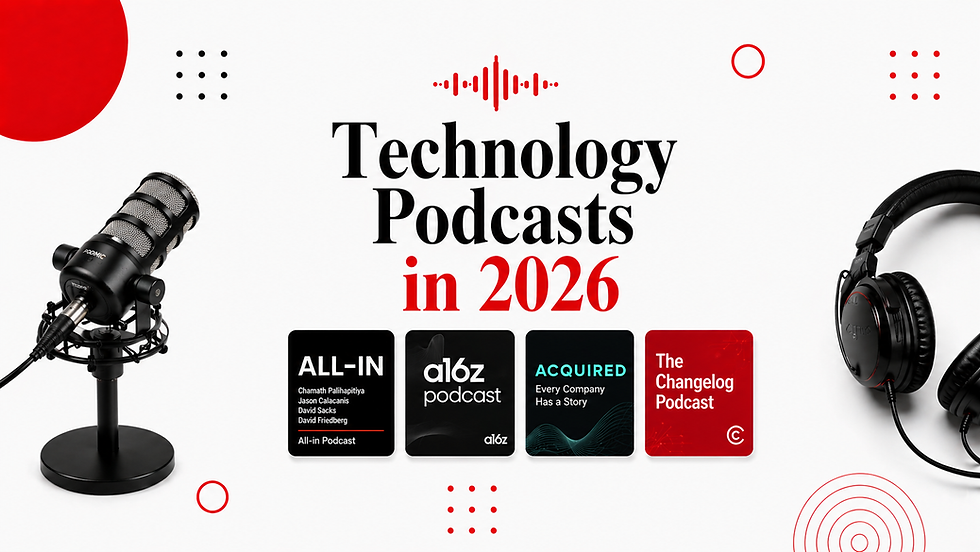
Technology Podcasts in 2026
In 2026, the technology podcast landscape has transitioned into a "video-first" ecosystem where YouTube serves as the primary engine for discovery and community engagement. While long-standing pillars like The Lex Fridman Podcast, Pivot with Kara Swisher and Scott Galloway, and The Vergecast continue to dominate the charts, the focus has shifted sharply toward "Agentic AI" and specialized niche shows like The AI Daily Brief and Hard Fork.
Producers are now heavily integrating AI into their workflows—not just for high-fidelity noise reduction and transcription, but for generating real-time interactive elements like live listener polls and "smart-cut" clips for social platforms. As general tech news becomes increasingly commoditized by AI aggregators, successful creators in 2026 are differentiating themselves through high-production video storytelling, raw human authenticity, and tiered subscription models that offer gated, hyper-specific technical deep dives.
Top New Tech Podcasts of 2026: Shows You Should Be Listening To
In 2026, several new tech podcasts have launched with a clear focus on AI, builders, and real-world applications. One standout is “Hard Fork: AI Edition” by The New York Times, which expanded into a more AI-focused format this year. Hosted by Kevin Roose and Casey Newton, the show breaks down weekly developments in AI, Big Tech, and startups, often featuring insiders from companies like OpenAI and Google. Another fast-growing show is “The Cognitive Revolution” by Nathan Labenz, which has gained major traction in 2026 thanks to deep, technical interviews with researchers and founders building cutting-edge AI systems.
A newer entrant that’s getting attention among operators is “No Priors”, hosted by Elad Gil and Sarah Guo. While it originally launched earlier, its 2026 season has repositioned it as a go-to podcast for understanding how AI is reshaping company building, product design, and venture strategy. Similarly, “Latent Space” by Alessio Fanelli and Swyx continues to grow rapidly in 2026 with episodes focused on AI engineering, LLM infrastructure, and developer workflows. These podcasts are especially popular with technical founders and engineers who want practical insights rather than high-level commentary.
On the more media-driven side, “Tech Won’t Save Us” hosted by Paris Marx has expanded its reach in 2026 with sharper coverage on the societal and political implications of AI and big tech power. Meanwhile, platform-driven shows like those from Spotify and Amazon (via Wondery) are launching new tech-focused series that combine video and audio formats, often distributed directly on YouTube for broader reach. The common thread across all these podcasts is clear: they are grounded in real builders, real products, and real use cases—making them highly relevant for anyone trying to stay ahead in tech in 2026.
How to keep the audience hooked
A primary strategy is to concentrate on providing unique and valuable content that distinguishes your podcast. This may include exploring niche topics that aren't widely covered, offering detailed analysis and expert insights, or providing practical tips and advice that listeners can implement in their own work. By delivering something different from what's already available, you can attract and retain a loyal audience that appreciates the expertise and perspective you offer.
Another crucial factor in making your podcast stand out is the quality of production. Investing in professional equipment, editing, and sound design can greatly enhance the overall listening experience, setting your podcast apart from amateur productions. A polished and professional podcast not only reflects well on your brand but also helps capture and maintain your audience's attention.
Moreover, engaging with your audience and building a community around your podcast can help differentiate it from others in the field. Encouraging listener feedback, responding to comments and questions, and featuring guest appearances from industry experts can all contribute to creating a more interactive and engaging podcast that stands out.
In conclusion, although the podcasting landscape may be crowded, there are several strategies that technology companies can use to make their podcasts stand out. By focusing on delivering unique and valuable content, investing in high-quality production, and actively engaging with their audience, companies can create a podcast that not only highlights their expertise but also positions them as leaders in their industry.
Five Tactics to Evaluate
Here are five tactics to consider when creating a successful technology podcast:
Identify your target audience and create content that resonates with them. Determine who you want to reach with your podcast and what topics will be most relevant and interesting to them. This will help you create a consistent theme for your podcast and ensure that each episode adds value to your listeners.
Find the right format for your podcast. There are many different formats for podcasts, from solo shows to panel discussions to interviews. Consider what format will best suit your content and audience, and be sure to mix things up to keep your listeners engaged.
Promote your podcast through multiple channels. In addition to promoting your podcast on your company's website and social media channels, consider submitting it to popular podcast directories like Apple Podcasts and Spotify. You can also reach out to relevant industry blogs and websites to see if they would be interested in featuring your podcast.
Invest in high-quality production. A well-produced podcast will not only sound better, but it will also be more professional and more likely to attract a larger audience. Invest in a good microphone, use quality editing software, and consider hiring a professional producer to help you create a polished final product.
By following these tactics, you can create a successful technology podcast that showcases your company's expertise and engages your target audience. Don't be afraid to experiment and try new things – the more you put into your podcast, the more you'll get out of it.

What Do Succesful Tech Podcasts Have In Common?
Successful tech podcasts share several key characteristics that contribute to their popularity and impact in the digital space. Firstly, a compelling and relevant topic is crucial to attract and retain listeners. Tech enthusiasts are always on the lookout for fresh insights, trends, and innovations in the industry, so a podcast that delves into these areas is more likely to resonate with the audience.
Moreover, the host or hosts play a significant role in the success of a tech podcast. Engaging and knowledgeable presenters who can communicate complex technical information in an accessible and entertaining manner can greatly enhance the listening experience. Their passion for technology and ability to engage with guests and listeners can create a sense of community around the podcast.
Consistency is another key factor that successful tech podcasts have in common. Regular episodes that are released on a predictable schedule help build a loyal audience base and keep them coming back for more. Additionally, high production quality, including clear audio, well-paced editing, and engaging visuals if applicable, can elevate the overall podcast experience and make it more enjoyable for listeners.
Networking and collaboration within the tech industry can also contribute to the success of a tech podcast. By featuring guest experts, industry insiders, and thought leaders, podcasts can offer unique perspectives and insights that set them apart from the competition. Building relationships with other podcasters, tech companies, and influencers can also help increase visibility and reach a wider audience.
In conclusion, successful tech podcasts stand out by offering valuable content, engaging hosts, consistent delivery, high production quality, and strategic collaborations. By focusing on these key elements, tech podcasts can attract a dedicated following and make a lasting impact in the ever-evolving world of technology and digital media.
Frequently Asked Questions
What makes a technology podcast engaging?
An engaging technology podcast combines clear insights, compelling storytelling, and relevant topics with a strong host voice that makes complex subjects easy to understand.
How do you choose the right topics for a tech podcast?
The best topics are based on current trends, audience interests, and real-world applications of technology, ensuring the content remains timely and valuable.
Should a technology podcast be interview-based or solo?
Both formats work, as interviews bring diverse perspectives and credibility, while solo episodes allow for deeper insights and stronger personal branding.
How can you simplify complex tech topics for listeners?
Simplifying complex topics involves using clear language, real-world examples, and structured explanations that make information accessible without losing depth.
How important is consistency in publishing?
Consistency is critical, as regular publishing builds audience expectations, improves retention, and supports long-term growth.
What role does storytelling play in a tech podcast?
Storytelling helps make technical content more engaging by framing ideas through real experiences, case studies, and relatable narratives.
How can you grow a technology podcast audience?
Growth comes from strong content, consistent publishing, effective promotion, guest collaborations, and distributing episodes across platforms like YouTube.
How long should episodes be?
Episode length depends on the format, but most successful tech podcasts range from 20 to 60 minutes, with shorter clips used for promotion.
What are common mistakes in tech podcasting?
Common mistakes include being too technical, lacking structure, inconsistent publishing, and failing to focus on audience value.
Who should start a technology podcast?
Technology podcasts are ideal for founders, engineers, marketers, and experts who want to share insights, build authority, and engage with a tech-focused audience.


Comments