
Your Podcast Launch Checklist for 2026: The Ultimate Guide

Your team is probably sitting in a familiar spot right now. Someone decided the brand needs a podcast, competitors are showing up in Apple Podcasts and Spotify, and now the work has landed on marketing. You need a plan that treats the show like a channel with goals, owners, timelines, and reporting, not a side project that depends on one enthusiastic internal champion.
That shift matters. A branded show can support awareness, thought leadership, pipeline influence, customer education, and partner marketing. But only if the launch is disciplined. Buying a mic and booking a guest isn't a launch strategy. It's just activity.

The good news is that a strong podcast launch checklist removes most of the chaos. It helps you make the early calls that shape everything later, including format, production model, distribution, promotion, and measurement. It also forces the build-versus-buy conversation early, before your team gets trapped doing media work with demand gen staffing.
At Podmuse, we've seen this firsthand while launching and growing shows for brands like Intel and PayPal. The teams that win aren't always the most creative. They're the ones that define the audience clearly, publish with consistency, and set up distribution and analytics before launch day. If you're still sorting out the basics, these steps for beginning a podcast are a useful companion read.
Table of Contents
1. Define Your Podcast Concept & Content Strategy - Choose a show your sales team can actually use
2. Secure Professional Recording Equipment & Studio Setup - Decide what quality floor your brand needs - What to outsource early
3. Plan Your Guest Booking & Interview Strategy - Book for relevance, not vanity
4. Develop Pre-Production & Post-Production Workflows - Build a workflow your team can repeat under pressure
5. Set Up Multi-Platform Distribution & Publishing - Publish for reach, control, and reuse
6. Create a Podcast Brand Identity & Marketing Plan - Make the show recognizable, promotable, and useful to the business
7. Implement Analytics & Performance Tracking Systems - Build reporting before you need to defend the budget
9. Build Community & Listener Engagement Channels - Build engagement around the episode, not beside it
10. Secure Legal, Licensing & Compliance Setup - Protect the brand before the first episode goes live
1. Define Your Podcast Concept & Content Strategy
Most branded podcasts struggle before they record a single minute. The problem isn't effort. It's that the team starts with “we should have a podcast” instead of “who is this for, and what business job should it do?”
For B2B brands, audience definition needs to get specific fast. “Marketing leaders” is too broad. A better starting point is demand generation leaders at mid-market SaaS companies, procurement leaders in fintech, or revenue operations teams inside enterprise sales orgs. That level of focus gives you cleaner topic selection, better guests, and sharper promotion.
Choose a show your sales team can actually use
A useful concept usually answers four questions. Who is the listener, what recurring pain are you solving, what format fits that problem, and why should this show exist from your brand instead of anyone else's?
That's where content pillars help. Pick a few themes you can sustain without forcing it. If you need inspiration, this list of podcast topic ideas for brands is a good way to pressure-test whether your concept has enough range.
Practical rule: If your team can't explain the show in one sentence and name the audience in one sentence, you're not ready to launch.
Real examples make the trade-off obvious. A founder-led interview show can work when the host already has credibility and access. A practitioner education show often works better for B2B marketing teams because clips, quotes, and episode takeaways can be reused across email, LinkedIn, sales enablement, and partner content.
Use a short planning doc and force decisions on:
Primary audience: Define the buyer, user, or influencer you want listening.
Format choice: Interview, solo analysis, co-hosted roundtable, or narrative.
Editorial boundaries: List the topics you will cover and the ones you won't.
Internal owner: Decide who approves content and who keeps production moving.
This is also the first build-versus-buy checkpoint. If your team is strong on messaging but weak on editorial planning, outside strategy support is usually worth it. Concept mistakes are expensive because they affect every episode after launch.
2. Secure Professional Recording Equipment & Studio Setup
You can have a sharp concept and strong guests, then lose trust in the first 30 seconds because the host sounds distant or the guest is echoing off a conference room wall. For brand podcasts, audio quality is not a nice-to-have. It signals whether the show is run with the same discipline as your other marketing channels.
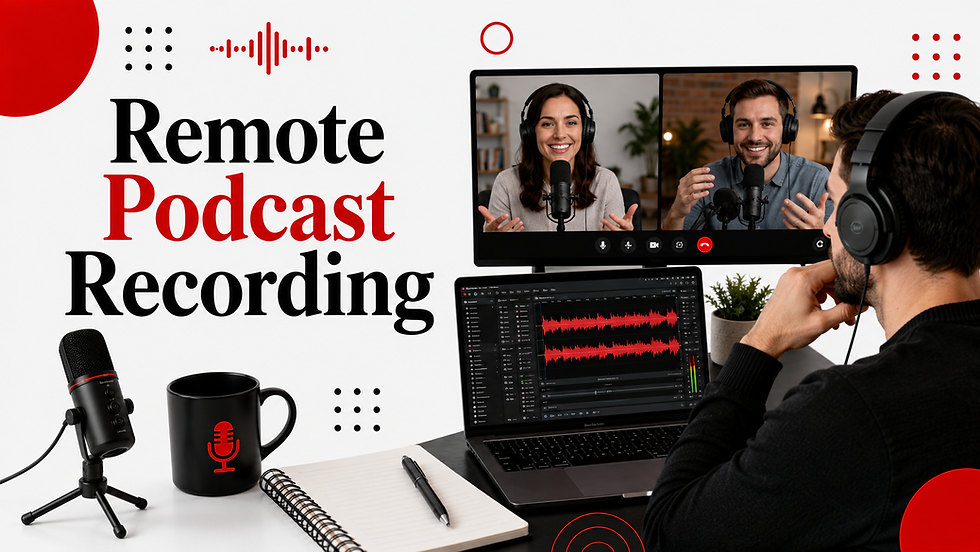
Start with the room. Room quality affects the recording more than teams expect, and it is usually cheaper to fix than buying better gear. A quiet office with carpet, curtains, and soft furniture will outperform a glass meeting room with a premium microphone. If you record remotely, standardize the guest experience too. Send a short prep note, require headphones, and use a platform that captures separate local tracks.

Decide what quality floor your brand needs
The right setup depends on volume, host visibility, and how much reputational risk sits on the show. If a senior executive is the face of the podcast, build a repeatable setup they can use without friction. That may mean a dedicated home kit or an office recording corner with a Shure SM7B, Rode Procaster, or a simpler USB mic such as the Shure MV7. For remote interviews, Riverside and SquadCast are common choices because separate local tracks make editing and repair much easier.
This is also a build versus buy decision. An in-house team can handle equipment selection if someone owns the process and will document settings, room choice, and recording checks. If no one on the marketing team wants to become the audio QA layer, outside setup support often costs less than fixing bad recordings week after week.
Use a simple standard:
What works:
Consistent host setup: Same mic, same room, same input levels.
Remote guest prep: Instructions sent the day before, with clear microphone and room guidance.
Backup capture: A second recording path for every session.
Basic monitoring: Headphones for hosts so problems are caught during the session, not in editing.
What usually fails:
Conference room recording: Hard surfaces, HVAC noise, and table reflections lower clarity fast.
Mixed host quality: One clean mic next to one laptop mic makes the show sound improvised.
Live troubleshooting on guest time: It slows the interview and weakens confidence.
Overbuying gear: Complex signal chains create more failure points if nobody on the team manages them.
What to outsource early
If the show supports pipeline, executive visibility, or partner relationships, production support is often a strategic purchase rather than an extra expense. A freelance engineer or podcast agency can set mic gain, clean up room issues, create recording templates, and train hosts on mic technique. That gives your team a reliable system instead of a pile of equipment.
I usually recommend outside help in two cases. First, the host is a senior leader with limited patience for technical setup. Second, the podcast needs to scale into a repeatable content engine with clips, transcripts, and consistent release timing. In both cases, the goal is the same: remove production risk before it becomes a brand problem.
A quick explainer can help your team visualize the setup choices:
3. Plan Your Guest Booking & Interview Strategy
A lot of teams treat guest outreach like PR. That's a mistake. Strong podcast booking is closer to programming. You're building a season of conversations that compound around a point of view.
Start with a tiered guest list. Put dream names at the top, realistic near-term targets in the middle, and trusted accessible guests at the bottom. That structure keeps momentum up while you work on bigger asks.
Book for relevance, not vanity
A recognizable guest can help, but only if they match the audience and the topic. For B2B brands, the best episodes often come from practitioners with direct operating experience, not celebrities from the broader business circuit. A revenue leader who can explain what changed in their pipeline review process will often outperform a famous executive giving polished but generic advice.
Build a simple booking system:
Guest criteria: Match each guest to a content pillar and a listener pain point.
Outreach notes: Reference their recent work, not a generic compliment.
Pre-interview call: Confirm angle, examples, and what's off-limits.
Promotion plan: Tell guests exactly what assets they'll receive after launch.
The best guest strategy produces useful conversations first and borrowed reach second.
There's also a resourcing question here. Internal teams can usually handle outreach when the host already has network access. If not, external booking support helps because it brings list building, outreach discipline, follow-up cadence, and guest prep into one operating rhythm.
Use real examples when shaping your shortlist. A show for B2B marketers might combine a few known operators, a few customers, a few ecosystem partners, and a few internal experts who can speak credibly without sounding promotional. That mix usually creates better repeat listening than a pure “big-name guest” strategy.
4. Develop Pre-Production & Post-Production Workflows
A lot of brand podcasts stall here. The strategy is approved, the gear is set up, guests are interested, and then the team realizes each episode needs ten small handoffs across marketing, creative, legal, and leadership. That is usually the point where a podcast stops feeling like a channel and starts feeling like a favor people squeeze in between other priorities.
The fix is operational, not creative.
If you want a show that can support campaigns, sales enablement, and repurposed content over time, every step before and after recording needs a clear owner, a due date, and a handoff standard. Topic approval, prep notes, recording logistics, raw file storage, editing rounds, show notes, clips, approvals, and scheduling should all live in one documented process.
Build a workflow your team can repeat under pressure
The first version does not need to be fancy. It needs to be usable when calendars get tight and launch energy wears off.
Start with a simple production map:
Pre-production: episode brief, audience takeaway, host outline, guest prep, approval checkpoint
Recording handoff: file naming rules, backup recording plan, storage location, transcript process
Post-production: edit scope, revision limit, show notes format, clip requests, final QA
Publishing prep: title review, episode description, links, artwork, stakeholder signoff
That structure protects the team from avoidable friction. It also makes resourcing decisions easier. If strategy and messaging should stay in-house but editing keeps slipping, outsource editing. If internal teams struggle to coordinate guests, scripts, approvals, and production calendars, outside production support can own the workflow while your team keeps brand control.
A practical stack often includes Google Drive, Notion, Airtable, or your project management system of record for briefs and approvals. Editing can happen in Adobe Audition, Descript, or Audacity. The tool matters less than the rule set around it. Document what the editor receives, what they deliver back, how many review rounds are allowed, and who has final approval.
Batching helps more than teams expect. Record a small bank of episodes before launch. Build templates for intros, outros, show notes, social clips, and internal review. Give every asset an exact home. Raw audio, cleaned masters, transcripts, graphics, and promotional copy should never sit in personal downloads folders or disappear in Slack threads.
For marketing teams, this is also where the build versus buy decision gets real. In-house production gives you speed on approvals and tighter message control. Agency or freelancer support gives you consistency, specialized editing, and a cleaner production cadence. The right choice usually depends on whether your team is trying to own a media function long term or prove the channel first and scale later.
If distribution planning is still loose, map the workflow backward from publish day so production deadlines match where the episode will go. This podcast distribution workflow guide is useful for aligning production timelines with publishing requirements across channels.
The goal is simple. Make each episode easier to ship than the last one. That is how a branded podcast becomes a repeatable marketing program instead of an ambitious one-off.
5. Set Up Multi-Platform Distribution & Publishing
A lot of brand teams hit friction here. The episode is edited, approvals are done, and then distribution turns into a patchwork of hosting settings, directory submissions, YouTube uploads, website embeds, and last-minute copy requests from social or demand gen. If that handoff is sloppy, the launch underperforms before the content has a fair shot.
Distribution is a channel design decision. It determines where the show gets discovered, how easy it is to share, and whether podcast content can support broader marketing goals like email engagement, sales enablement, and search visibility. For brand teams, that usually means publishing to the major listening apps, owning a web destination for each episode, and planning from the start for audio, video, and written formats.
Publish for reach, control, and reuse
Choose a hosting platform that gives your team clean feed management, reliable directory distribution, embeddable players, and usable analytics. Apple Podcasts and Spotify are table stakes, but they should not be the whole plan. YouTube matters for search and clip distribution. Your site matters for conversion and audience ownership. A library of episode pages or high-converting podcast landing pages gives paid, email, and sales teams a destination they can effectively use.

Launch should run like a campaign. Set the publish date, confirm directory approvals in advance, schedule the episode pages, prep social links, and make sure internal teams know what goes live and when. Releasing more than one episode at launch often helps because new listeners have a reason to keep going instead of sampling one episode and leaving.
The teams that handle distribution well usually get four things right:
Metadata is written for discovery: Show descriptions, episode titles, categories, author fields, and artwork are consistent across every platform.
Each episode has a home base: The website version includes the player, summary, transcript or key takeaways, and a clear next step.
Formats are planned before publish day: Full audio, video versions or clips, quote assets, and newsletter copy are prepared as part of the release.
Ownership is clear: One person owns feed accuracy, publishing deadlines, and directory issues.
If your team wants the operating steps, this podcast distribution setup guide is a practical reference.
This is also one of the clearest build versus buy checkpoints in the launch process. In-house publishing gives you tighter control over timing, messaging, and compliance review. A production partner or agency usually makes more sense when your team needs dependable publishing operations across multiple platforms, especially if the internal owner is a marketer who should be focused on promotion and performance, not RSS troubleshooting.
6. Create a Podcast Brand Identity & Marketing Plan
You can feel the risk here before launch. The creative team wants a show people will choose on purpose. Brand leadership wants something that clearly supports company positioning. Demand gen wants every episode to contribute to pipeline, not just impressions. If those priorities never get aligned, the podcast turns into an expensive side project with nice artwork.
A usable brand identity solves that problem. The show needs a clear point of view, a recognizable visual system, a host style that fits the audience, and messaging rules that make promotion easier across channels. Cover art, intro music, guest promos, email copy, social clips, landing pages, and host talking points should feel connected because they are built from the same system.
Make the show recognizable, promotable, and useful to the business
Brand identity goes beyond cover art. It includes the promise the show makes, the format listeners come back for, the way episode thumbnails look in a feed, and the tone your team uses everywhere the show appears. Strong branded podcasts feel consistent across audio, video, email, paid social, and the website.
Treat this like channel planning, not creative packaging. Marketing teams should decide before launch how the podcast supports category awareness, account engagement, executive visibility, customer education, or partner marketing. That decision shapes the brand itself. A thought leadership show for enterprise buyers should not sound like a product update feed, and a customer marketing show should not use the same promotion plan as a top-of-funnel brand play.

A workable marketing plan usually covers three layers:
Launch visibility: Internal announcement, customer and prospect email sends, guest amplification, executive social posts, and homepage or resource center placement.
Episode-by-episode promotion: Clip distribution, quote graphics, newsletter mentions, sales enablement use cases, and paid support for episodes that serve a clear campaign goal.
Conversion path: A destination that gives listeners a next step, whether that is subscribing, joining a list, booking time, downloading a resource, or consuming related content. Strong high-converting podcast landing pages make that path easier to manage.
Promotion cadence matters as much as design quality. A polished show with no repeatable campaign motion will stall fast. Teams that want a stronger reporting connection between branding, distribution, and episode performance should review this guide to podcast data and analytics for marketers.
This is also a practical build-versus-buy checkpoint. In-house design makes sense when your team already has strong brand systems, copy support, and a marketer who can run campaign operations every release. Outside help makes more sense when the podcast needs to function like a repeatable growth channel, with strategy, creative production, promotion, and performance ownership handled on schedule.
7. Implement Analytics & Performance Tracking Systems
If leadership asks after month one whether the podcast is working, “people liked it” won't help. Analytics setup has to happen before launch, not after the first reporting scramble.
For branded shows, the question isn't just audience size. It's whether the podcast contributes to the outcomes your team already cares about. That could mean reach into a target account list, engagement from specific job roles, traffic to a landing page, newsletter signups, demo interest, or support for a larger thought leadership program.
Build reporting before you need to defend the budget
A practical launch framework recommends selecting 3 to 5 primary KPIs within the first 90 days, documenting realistic targets, and sharing an initial performance snapshot after the first 30 days. It also advises tracking total downloads per episode, unique listeners, average consumption rates, subscriber growth, drop-off points inside episodes, and title-level click behavior, all summarized in Content Allies' podcast launch checklist.
That's the right level of rigor for a marketing team. It's enough structure to guide decisions without creating reporting theater.
Set up:
A simple dashboard: Marketing, sales, and leadership should be able to view it without asking for screenshots.
UTM tracking: Add parameters to links from show notes, landing pages, and campaign assets.
Drop-off review: If listeners leave at the same point repeatedly, the edit or structure needs work.
Firmographic overlays where possible: Industry and job role context matter more than vanity metrics for B2B.
If you need a practical framework, Podmuse's guide to podcast data analytics is a useful starting point.
Don't overbuild at launch. Teams need a dashboard they'll use, not an analytics stack nobody trusts. If internal ops are limited, external help is often most valuable here because reporting logic, CRM attribution, and KPI discipline tend to slip when everyone is busy shipping episodes.
8. Establish Sponsorship & Monetization Strategy
A lot of brand teams hit the same point after launch planning. Leadership asks how the podcast will make money, while marketing is still trying to prove the show can influence pipeline, support sales conversations, and justify ongoing production costs.
Answer that question before the first sponsorship conversation. For branded podcasts, monetization is a business model choice, not a default milestone.
Start by deciding what kind of asset you are building. Some shows should stay ad-free because the primary return comes from stronger buyer trust, better account engagement, and more usable content for campaigns and sales enablement. Other shows can support a hybrid model with a small number of well-matched sponsors. A smaller group should be built as true media properties from day one, with packaging, inventory planning, and a sales motion behind them.
That choice affects more than revenue. It changes episode structure, host reads, guest selection, audience targets, and how much production capacity you need internally.
A practical framework looks like this:
Brand-first show: Measure influence on awareness, relationships, and pipeline support. Keep the listener experience focused on your brand.
Hybrid show: Accept sponsorship selectively. Only add partners that fit the audience and do not create message conflict.
Media-property show: Build for revenue from the start. Treat the podcast like inventory you need to package, sell, deliver, and renew.
For marketing teams, the build vs. buy decision matters here. If the show is brand-first, internal ownership often works well because the monetization plan is really a revenue attribution plan. If you want sponsorship revenue, many teams benefit from outside help. Rate cards, sponsor outreach, host-read standards, insertion logistics, and make-good policies are easy to underestimate. An agency or specialized partner can shorten the learning curve, but only if they can show how they price inventory and protect show quality.
If your broader content operation spans newsletters, webinars, video, and syndication, this guide on how to maximize content revenue streams is a useful way to frame the decision.
What causes problems is mixed intent. A leadership team expecting influence on revenue will be disappointed if production starts stuffing episodes with ad slots too early. A team chasing sponsorship revenue will struggle if no one has built a sponsor package, a sales process, or audience positioning sharp enough to sell. Set the model early, document the trade-offs, and get clear on whether your team should run monetization in-house or buy that capability.
9. Build Community & Listener Engagement Channels
You launch the first episodes, downloads come in, the team feels good, and then the relationship stalls because nothing is set up after the listen. That is the point where many branded podcasts stop acting like a marketing channel and start acting like a content archive.
Marketing teams need a post-listen path. One channel is rarely enough, but five under-managed channels will create more work than value. Choose the few places your audience already uses and your team can run every week. For most brand podcasts, that means email first, LinkedIn second, and one deeper engagement environment such as a customer community, Slack group, webinar series, or event follow-up program.
The goal is simple. Turn anonymous listening into known audience behavior your team can measure and use.
Build engagement around the episode, not beside it
Each episode should push listeners toward one next action tied to your funnel. Ask for a reply to the episode email. Send people to a discussion thread. Invite them to submit a question for a future guest. Offer a registration page for a related roundtable or webinar. If every episode points somewhere different with no operating plan behind it, engagement drops because the habit never forms.
Strong community design for a brand podcast usually includes:
An email layer: episode recap, key quotes, and one clear CTA
A response mechanism: question collection, polls, topic requests, or guest nominations
A distribution kit for guests: prewritten posts, clips, tags, and trackable links
A sales handoff: short summaries and episode links reps can send in active deals
A feedback loop: recurring review of comments, replies, and audience questions so the show informs future content
Community work also needs ownership. If no one is responsible for inbox replies, comment moderation, guest follow-up, and CRM tagging, engagement will look active for a few weeks and then fade. I usually tell teams to assign this like any other channel function, with a named owner, response SLA, and weekly reporting rhythm.
This is also one of the clearest build versus buy decisions in the launch process. If your internal team already runs lifecycle email, social distribution, and webinar operations, you can often keep listener engagement in-house. If the podcast team is small and production is already stretching capacity, outside support can make sense. Agencies and contractors can handle audience ops, clip distribution, moderation, and reporting, but only if they plug into your CRM, campaign calendar, and brand voice. Otherwise you get activity without usable pipeline insight.
One warning. Do not treat downloads as proof of community health. Community shows up in replies, repeat attendance, referral traffic, subscriber growth, and the quality of questions people send back.
For brand marketers, that distinction matters. A podcast becomes a scalable performance channel when listener engagement feeds owned audience growth, sales conversations, and sharper content decisions. If your team cannot maintain that system after launch, buying operational help is often the smarter decision than letting the channel underperform.
10. Secure Legal, Licensing & Compliance Setup
A lot of brand teams get to this point with the hard parts already in motion. The show concept is approved, production is taking shape, guests are lining up. Then legal review starts late and the launch date slips because nobody settled rights, disclosures, or data handling.
That problem is avoidable.
For a branded podcast, legal setup is operational setup. If your team cannot answer who owns the audio, what permissions you have from guests, what music rights are on file, and how listener data is collected and stored, you do not have a launch-ready channel. You have production assets with risk attached.
Protect the brand before the first episode goes live
Start with ownership and permissions. If an external producer, freelancer, or agency touches the show, the contract should spell out who owns the raw recordings, edited episodes, transcripts, artwork, short-form clips, and platform logins. I have seen teams assume they owned everything because they paid for production, then lose weeks trying to retrieve source files or re-cut content after a vendor change.
Build your legal checklist around the actual workflows your marketing team will run:
Guest release forms: Written permission to record, edit, publish, distribute, and promote each appearance.
Music and sound licenses: Documentation for intro music, bed tracks, and any third-party audio elements.
Sponsor and disclosure language: Approved wording for host-read ads, partner mentions, affiliate relationships, and social promotion.
Privacy and data handling: Rules for email capture, attribution tracking, retargeting, contest entries, and CRM syncs.
Claims review: A process for checking regulated statements, customer stories, and any performance claims made on the show.
Hosting and publishing tools also matter here. As noted earlier, dedicated podcast platforms can make file control, feed access, publishing permissions, and reporting easier to standardize. They do not solve compliance on their own, but they reduce the odds of scattered assets and unclear ownership.
This is a clear build versus buy checkpoint. If your in-house legal team already supports webinars, paid partnerships, customer marketing, and privacy review, they can usually extend those processes to podcasting with the right production brief. If podcasting is new, or if multiple outside vendors are involved, outside help often speeds things up. A producer or agency with brand podcast experience can translate legal requirements into release forms, approval steps, and publishing controls your team will follow.
The goal is simple. Launch with clean rights, approved language, and documented ownership, so the podcast can scale like a real marketing channel instead of creating avoidable cleanup work after episode one.
10-Point Podcast Launch Comparison
Item | Implementation Complexity 🔄 | Resource Requirements ⚡ | Expected Outcomes 📊⭐ | Ideal Use Cases 💡 | Key Advantages ⭐ |
|---|---|---|---|---|---|
Define Your Podcast Concept & Content Strategy | High, strategic research and planning | Medium, time, stakeholder input, market research | Strong audience fit, clearer positioning 📊, ⭐⭐⭐ | New show launches, B2B thought leadership, long-term content plans | Provides direction for production, improves targeting and retention |
Secure Professional Recording Equipment & Studio Setup | Medium, technical setup and learning curve | High, capital for mics, interfaces, acoustic treatment | Professional audio quality and fewer technical issues 📊, ⭐⭐⭐ | Shows prioritizing sound quality, frequent guest interviews | Crisp audio, better guest experience, enables multitrack editing |
Plan Your Guest Booking & Interview Strategy | Medium–High, outreach, scheduling, vetting | Medium, time, PR/network resources | Audience growth, credibility via guests 📊, ⭐⭐⭐ | Thought leadership, network expansion, B2B credibility building | New audiences through guest networks, promotional lift, authority |
Develop Pre-Production & Post-Production Workflows | Medium, documentation and tool setup | Medium, editors, software, time per episode | Consistent quality and faster turnaround 📊, ⭐⭐⭐ | Regular publishing cadence, team-based production | Efficiency, consistency, easier onboarding and repurposing |
Set Up Multi-Platform Distribution & Publishing | Low–Medium, RSS and directory submissions | Low–Medium, hosting, metadata work, occasional video effort | Increased discoverability and cross-platform reach 📊, ⭐⭐⭐ | Audience growth, SEO, video podcasting on YouTube | Maximizes reach, platform analytics, improved searchability |
Create a Podcast Brand Identity & Marketing Plan | High, creative strategy and campaign planning | High, design, paid media, content production | Strong brand recognition and audience acquisition 📊, ⭐⭐⭐ | Competitive niches, monetization-focused shows, B2B demand gen | Differentiation, sponsorship appeal, measurable campaign ROI |
Implement Analytics & Performance Tracking Systems | Medium, integrations and setup | Medium, analytics tools, technical setup, reporting time | Data-driven optimization and ROI visibility 📊, ⭐⭐⭐ | ROI-focused campaigns, sponsor reporting, growth optimization | Audience insights, conversion tracking, A/B testing capability |
Establish Sponsorship & Monetization Strategy | High, sales, packaging, compliance | Medium–High, sales effort, legal, audience threshold | Revenue generation and sponsor relationships 📊, ⭐⭐⭐ | Mature shows (e.g., 10k+ downloads/mo), agency-managed podcasts | Direct revenue, diversified monetization, dynamic ad options |
Build Community & Listener Engagement Channels | Medium, ongoing moderation and content | Medium, community manager, platforms, content creation | Higher retention, advocacy, user-generated ideas 📊, ⭐⭐ | Loyalty-building, premium community offerings, listener feedback | Strong listener loyalty, feedback loop, organic promotion |
Secure Legal, Licensing & Compliance Setup | Medium–High, legal review and ongoing checks | Medium, legal fees, music licenses, insurance | Risk mitigation and regulatory compliance 📊, ⭐⭐ | Sponsored content, large distribution, data-driven campaigns | Legal protection, compliance for monetization, brand credibility |
Your Launch Is Just the Beginning
A strong podcast launch checklist gives your team something more valuable than a publish date. It gives you an operating model. That's what separates shows that create business value from shows that produce a burst of internal excitement and then stall.
The launch itself is only the first test. After that, the true work begins. Can your team sustain the editorial quality? Can you keep guests coming in, assets going out, and performance reporting visible? Can you improve the show based on listener behavior instead of gut feel? Those questions determine whether the podcast becomes a repeatable channel or a quarterly experiment.
For brand marketers, the biggest mistake is treating podcasting like a one-time creative initiative. It isn't. It behaves more like a hybrid of content marketing, media production, audience development, and campaign operations. That's why the build-versus-buy question matters so much. If you ask a lean demand gen team to own strategy, host coaching, booking, production, publishing, design, clips, distribution, and analytics without support, the show usually becomes inconsistent. Not because the team lacks talent, but because the workload is wider than it appears at kickoff.
That's also why the best launches start with clear decisions about ownership. Keep the parts that match your team's strengths. Message, positioning, executive alignment, and campaign integration often belong inside the business. Recording support, editing, publishing ops, audience growth mechanics, and reporting systems are often better handled by specialists who do that work every day.
Professional help isn't about outsourcing taste. It's about reducing execution risk. A strategic partner can keep the launch timeline honest, pressure-test the concept, set up the right workflows, and make sure the first episodes don't land with avoidable technical or operational issues. Equally, they can help you measure the show as a channel, not just admire it as content.
That matters more as expectations rise. Leadership doesn't want a podcast because podcasts are trendy. They want a program that supports reputation, reach, relationships, and revenue goals. The more clearly your launch plan ties into those outcomes, the easier it becomes to protect budget and build internal support after the first few episodes.
At Podmuse, we approach branded podcasts that way. We handle end-to-end production, distribution, promotion, and strategic support so your team can focus on the audience, the message, and the business objective behind the show. If you're ready to turn a rough idea into a performance-driven podcast, a structured launch process is the right place to start. The next step is deciding which parts your team should own and which parts a specialist should take off your plate.
If you want a branded podcast that works like a real marketing channel, not a side project, Podmuse can help you plan the concept, produce the show, distribute it across the right platforms, and build the reporting and promotion system behind it. Book a free consultation to map the right launch model for your team.


Comments