
How to Be a Guest on a Podcast: The 2026 Playbook

You're probably here because podcast guesting has moved from “nice thought” to “active priority.”
A founder sees competitors showing up on niche industry podcasts and starts wondering whether those interviews are shaping category perception. A demand gen leader looks at paid channels getting more crowded and wants another way to get trusted attention in front of the right buyers. A brand marketer wants authority, reach, and usable content, but doesn't want to launch a show from scratch.

That's where many teams make the first mistake. They treat podcast guesting like lightweight PR. In practice, the teams that get real value from it run it like a selective outbound channel. They qualify targets, tailor the angle, prepare the guest, and build a post-release distribution plan before the interview is even recorded.
That's the answer to how to be a guest on a podcast. It's less about “getting on shows” and more about making disciplined decisions at each stage so your effort compounds instead of disappearing into a folder full of unanswered pitches.
Table of Contents
Building Your Target List of Podcasts - Start with audience fit, not podcast fame - Use a qualification filter before outreach - Build tiers instead of one giant list
Crafting a Pitch That Secures the Booking - What strong pitches do differently - A practical pitch framework - Two example outreach drafts
Preparing for a High-Impact Interview - Prepare for flow, not for script - Technical prep changes how you sound - Use a pre-interview brief
Mastering Your On-Air Performance and Presence - Speak to the listener, not to your own talking points - Stories carry more weight than claims - Presence is timing, tone, and restraint
Maximizing Your Appearance After Publication - Treat the episode like a content asset - Help the host win too - Turn one appearance into the next one
Why Podcast Guesting Is a Strategic Imperative
Podcast guesting works when you stop thinking of it as exposure and start treating it as borrowed trust.
A good host has already done the hard part. They've earned attention from a specific audience, shaped the tone of the conversation, and built enough credibility that listeners will stay with a deep discussion. When you join that show as a guest, you don't need to manufacture attention from zero. You need to deserve the seat.
That's why a strategic podcast appearance often outperforms a pile of short-form posts in authority-building. Social content is usually skimmed. A podcast interview gives you time to explain a process, show judgment, and prove you actually know what you're talking about. For executives and subject-matter experts, that difference matters.
Practical rule: Don't ask whether a podcast is “big.” Ask whether its audience contains people who can buy, influence, refer, or amplify your message.
There's also a channel advantage here. A host-led interview feels different from a branded asset published on your own site. The conversation format lowers resistance. Listeners hear how you think under live conditions, how you explain trade-offs, and whether your expertise holds up when someone pushes for specifics.
That's why the strongest teams don't chase vanity appearances. They prioritize fit, narrative depth, and downstream usability. If the show reaches the right buyers, allows enough room for substance, and gives you clips and insights your team can repurpose, it's often more valuable than a placement that looks impressive on paper but never reaches your actual market.
For brands weighing guesting against launching a show, the distinction is simple. Hosting gives you control. Guesting gives you access. Most companies need both eventually, but if your immediate goal is fast authority transfer into existing listener communities, guesting usually has lower friction. Podmuse has written about why guesting on podcasts often outshines hosting your own, especially when your team wants market reach without taking on full production responsibility.
The strategic imperative isn't “be everywhere.” It's to show up in the right conversations, with the right angle, often enough that the market starts hearing the same expertise from multiple trusted voices.
Building Your Target List of Podcasts
Most guest outreach fails before the first email goes out.
The issue usually isn't weak writing. It's bad list construction. Teams build targets based on broad relevance, recognizable logos, or whatever appears first in Apple Podcasts and Spotify. Then they pitch dead shows, misaligned audiences, or hosts who would never book that guest in the first place.
One industry update cites about 4.58 million total podcasts, but only around 9.5% remain actively publishing, which means roughly 1 in 10 shows are current enough to be worth pitching, according to JustReachOut's podcast guesting analysis. That single filter changes the whole process. If a show isn't active, nothing else matters.

Start with audience fit, not podcast fame
A large show with weak audience overlap is a distraction. A niche show that speaks directly to operators, buyers, or category insiders is often more useful.
When building a list, start with three questions:
Who needs to hear this guest? Define the job title, buyer stage, or community.
What problem does the guest explain well? Not their broad expertise. Their strongest teachable angle.
Which show formats support that angle? Interviews, founder conversations, operator roundtables, technical explainers, or trend commentary.
A cybersecurity founder and a consumer wellness CMO shouldn't target shows the same way, even if both want “brand awareness.” The first may need operator-heavy discussions with technical hosts. The second may need brand, retail, or creator-economy audiences where consumer storytelling lands better.
Use a qualification filter before outreach
The operational part of how to be a guest on a podcast separates pros from amateurs. Before adding a show to your outreach queue, qualify it like a sales team would qualify an account.
Use a simple scorecard:
Criterion | What to check | Why it matters |
|---|---|---|
Publishing activity | Recent releases and steady cadence | Active shows are more likely to respond and promote |
Audience alignment | Topic, listener type, comments, reviews | Relevance beats broad exposure |
Guest pattern | Who the host has invited before | Past guest profiles predict booking likelihood |
Host style | Tactical, conversational, debate-driven, beginner-friendly | Your guest needs to fit the format |
Contact path | Clear booking email, form, producer contact | Reduces outreach waste |
Go further if the placement matters. Review transcripts, scan episode titles for recurring themes, and look for topic gaps your guest could fill. If the host has covered AI strategy ten times but hasn't discussed implementation failure, change the angle. If the show speaks to CMOs but your expert talks like an engineer, adapt the language.
Correct contact data matters too. A lot of outreach dies because the message never reaches the producer or host. If your team is doing manual research, this guide for sales professionals is a practical reference for finding the right email path without relying on guesswork.
A target list should feel small and sharp, not long and hopeful.
Build tiers instead of one giant list
Don't manage fifty podcasts as if they deserve the same effort.
Split your list into tiers based on strategic value and booking probability. The top tier gets full research, customized angles, and host-specific notes. Middle-tier shows may still get personalized outreach, but with lighter preparation. Lower-tier opportunities can stay parked until you need more volume.
Some teams also maintain separate tracks by objective:
Authority track for respected niche hosts
Pipeline track for buyer-heavy audiences
Network track for relationship-building inside the industry
Content track for shows likely to produce reusable clips and quotable moments
That makes prioritization easier. It also prevents the common mistake of treating all podcast placements as interchangeable. They aren't.
Crafting a Pitch That Secures the Booking
Once your target list is clean, the booking decision gets made in the inbox.
Most bad pitches fail in predictable ways. They're too long, too self-focused, too generic, or too vague on audience value. Hosts don't need another message saying someone is “passionate to share insights.” They need a reason to believe the conversation will be useful for listeners and easy to produce.
What strong pitches do differently
A high-response podcast guest pitch should be tightly personalized. Listen to at least one episode first, reference a recent episode or specific takeaway, state the exact listener value proposition, and offer 2–3 concrete topic ideas. Guidance also recommends attaching a one-sheet or media kit, as outlined in Zencastr's guesting guidance.
That sounds simple, but the point is often missed. Personalization isn't a compliment. It's proof of fit.
A useful pitch tells the host four things quickly:
You know their show.
You understand their audience.
You have a shaped topic, not a vague willingness to chat.
You'll be easy to book and worth publishing.
A practical pitch framework
The best outreach usually follows this structure:
Opening line tied to a recent episode, segment, or host viewpoint
Reason for reaching out framed around listener benefit, not your bio
Topic options with specific angles, not broad subjects
Credibility support in brief, plus a one-sheet or prior appearance links
Simple ask that gives the host an easy yes or no
Here's the trade-off most guests get wrong. They try to sound impressive instead of legible. A host scanning email between recordings doesn't want dense paragraphs. They want clean judgment.
Keep the pitch short enough to skim, but specific enough to trust.
Two example outreach drafts
For a B2B SaaS founder
Subject: Guest idea for [Podcast Name] on onboarding friction in B2B SaaS
Hi [Host Name],
I listened to your recent episode on product-led growth, especially the part where you pushed on why activation drops after signup. That stood out because acquisition is often discussed, while the operational friction that happens right after is skipped.
I think your listeners would get value from a conversation on how SaaS teams can spot the handoff failures between marketing, product, and customer success before those issues show up as “poor fit.”
A few angles that could work:
Why good top-of-funnel messaging still produces weak activation
Where onboarding friction comes from inside GTM teams
How founders can diagnose whether they have a product problem, a messaging problem, or a customer education problem
I've attached a short one-sheet with bio, topics, and past appearances. If this feels aligned, happy to send a tighter outline and work around your format.
Best, [Name]
For a B2C brand marketing leader
Subject: Possible episode idea on brand storytelling that survives channel fragmentation
Hi [Host Name],
I listened to your episode on creator partnerships and liked your point that brand teams often confuse visibility with resonance. That's exactly where a lot of consumer brands get stuck.
I'd love to suggest [Guest Name] for a conversation focused on how brand teams adapt one core story across retail, paid social, creator content, and audio without flattening the message.
Possible discussion points:
How to keep a brand message coherent across multiple channels
Where consumer brands over-script content and lose authenticity
How marketing leaders can brief for consistency without making every asset sound the same
I can send a one-sheet, headshot, and prior interview links if helpful.
Thanks for considering it, [Name]
Good pitches don't sound templated, even when your team uses a repeatable framework. If you need support at scale, agencies and booking partners can help operationalize the process. Podmuse, for example, offers interview booking as part of its podcast services, alongside production and distribution support.
Preparing for a High-Impact Interview
A booking creates potential. Preparation determines whether that potential turns into a memorable episode or a forgettable one.
The strongest guesting playbook treats podcast interviews like a performance channel. The guest is expected to bring a clear audience benefit, a compelling narrative, and promotion after release. Practical guidance recommends referencing at least two specific episodes you listened to and offering 2–3 concrete talking points, as covered in Rephonic's interview booking playbook.

Prepare for flow, not for script
Guests who script themselves sound brittle. Guests who wing it drift.
The middle ground is better. Build a prep document with your opening story, key ideas, examples, and the one or two points you really want the listener to remember. Then practice saying those ideas out loud until they feel natural.
A simple pre-recording outline usually includes:
Core thesis: The main thing you want the audience to understand
Proof points: Stories, examples, lessons, and moments of tension
Soundbites: Short phrases that make the idea easy to remember
Boundaries: Topics you won't speculate on or claims you can't support
If you need help shaping stronger prompts, Podmuse has a useful piece on questions to ask on a podcast that also helps guests anticipate the kinds of turns a host may take.
Technical prep changes how you sound
Strong ideas get ignored when the recording quality is poor.
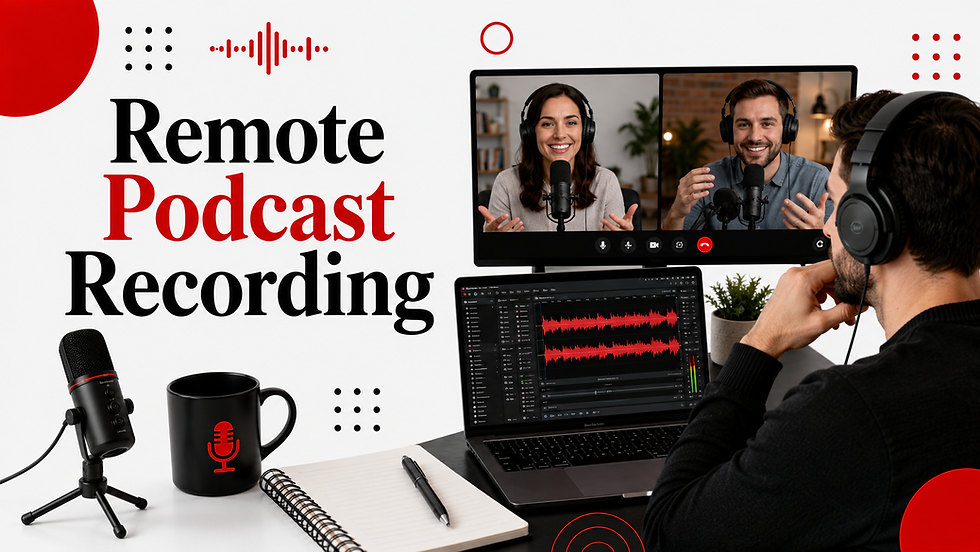
You don't need a complicated setup, but you do need discipline. Use headphones. Test your mic early. Shut down noisy apps. Pick a quiet room with soft surfaces if possible. If the show records video, frame yourself cleanly and make sure your lighting doesn't flatten your face into the background.
Hosts notice small things:
Audio discipline: No speaker feedback, keyboard clatter, or room echo
Visual discipline: Stable camera, neutral background, clean composition
Timing discipline: Join early, confirm timezone, keep your calendar buffer
Here's a practical walkthrough on interview readiness:
Use a pre-interview brief
The easiest way to calm nerves is to remove avoidable ambiguity.
Send or confirm a short pre-interview brief covering topic direction, listener level, do-not-miss points, pronunciation, call-to-action preferences, and whether the host wants a formal bio read or a looser intro. If a producer sends an intake form, fill it out carefully. The quality of your prep often signals the quality of you as a guest.
A host doesn't need perfection. They need someone prepared enough to make the conversation feel effortless.
Mastering Your On-Air Performance and Presence
The interview itself is not a test of knowledge. It's a test of communication.
Plenty of executives know their subject cold and still underperform on podcasts because they answer like they're in an internal meeting. They stack jargon, over-explain context, and ignore the listener's level of familiarity. That usually makes the host work harder and the audience tune out.
Guidance for guest speakers shows that hosts and schedulers care about audience demographics, keeping language accessible, matching episode timing, and bringing 5 concrete points or anecdotes, according to independent guest-prep advice from NSGC Perspectives. That represents the standard. Fit the room you're in.
Speak to the listener, not to your own talking points
A strong guest adapts in real time. If the host asks a beginner-level question, answer at a beginner level. If the show is technical, go deeper without showing off.
That means translating expertise instead of displaying it. Use plain language first, then add nuance only when it helps. If you can't explain an idea clearly, it usually won't land in audio.
A few practical adjustments matter:
Match the tempo: Long answers can work, but only if they stay organized.
Define terms: Don't assume the audience uses your internal vocabulary.
Respect the format: A short daily show needs tighter answers than a long-form founder interview.
Stories carry more weight than claims
Listeners remember movement. They remember a decision, a mistake, a change in view, or a moment where stakes became clear.
So instead of saying your team “improved alignment,” tell the story of the meeting where marketing, sales, and product realized they were solving three different problems under the same label. Instead of saying “positioning matters,” explain how a slight wording shift changed the kind of questions prospects started asking.
Give the host examples they can pull on. A story creates follow-up questions. A slogan ends the conversation.
Presence is timing, tone, and restraint
Good podcast presence is often quieter than anticipated.
It shows up in pacing. In not interrupting. In hearing the actual question. In leaving room for the host to guide. It also shows up in restraint. You don't need to force every credential or wedge in every offer.
The best guests sound composed, useful, and human. They know when to go deep, when to simplify, and when to stop talking.
If you're learning how to be a guest on a podcast, that's the skill to practice most. Not sounding polished. Sounding clear.
Maximizing Your Appearance After Publication
A podcast appearance has two lives. The first is the interview itself. The second is everything your team does with it after it goes live.
Most guests stop too early. They share the episode once, maybe repost the host's announcement, then move on. That leaves most of the value untouched. Smart teams build a small distribution system around every release.
Expert guidance emphasizes sharing promotion assets immediately after booking and having a plan for post-appearance distribution to improve conversion and maximize value for both the guest and the host, as discussed in this podcast workflow video on booking and distribution.

Treat the episode like a content asset
Before publication, ask the host or producer what assets they'll provide. Ideally that includes episode art, links, short clips, quotes, or timestamps. If they don't provide much, your team should still be ready to create derivative content from the final episode.
A practical post-release sequence looks like this:
Day of release: Share the episode link across LinkedIn, X, newsletter, and internal Slack
Next few days: Pull one clip, one quote, and one written takeaway into separate posts
Following week: Turn the strongest segment into blog, email, or sales-enablement material
Later: Reference the appearance in future outreach and speaker bios
If you want a more detailed framework for content recycling, Klap's tips for repurposing podcasts are useful for turning one conversation into multiple short-form assets without making everything feel repetitive.
Help the host win too
Promotion is not just self-distribution. It's relationship management.
Tag the host. Thank them directly. Send a personal note when the episode performs well or sparks useful replies. If your team has design support, make the host easy-to-share visuals too. The hosts who see you behave like a partner are the ones who remember you.
That matters because podcast guesting is partly a reputation game. Producers talk. Hosts notice who arrives prepared, gives clean audio, promotes the episode, and treats the team professionally.
Turn one appearance into the next one
Every published interview should make future booking easier.
Update your one-sheet with the new appearance. Save strong clips. Pull a short description of the discussion topics that landed well. Notice which angles created comments, inbound messages, or follow-up invites. That's your evidence base for the next round of outreach.
You can also expand the asset internally. Podmuse has a practical guide on repurposing one recording into multiple social posts, which is useful if your team wants to extend the life of each conversation beyond the original feed.
A simple tracking sheet is enough. Log the show, audience fit, topic angle, publication date, promotion status, and any resulting outcomes you can observe qualitatively. Over time, patterns show up. Certain hosts produce better clips. Certain topics open more doors. Certain audience types respond to a more tactical style. That's the decision science part again. Don't just appear. Learn.
If your team wants a structured guesting program instead of ad hoc outreach, Podmuse helps brands and executives secure relevant podcast interviews, prepare guests, and build distribution around each appearance so the effort turns into a repeatable marketing channel rather than a one-off booking.


Comments