
7 Best Podcast About Travel Shows for 2026

Many teams shortlisting a podcast about travel start with the best-known name, then discover the format doesn't match the message, guest pool, or budget. The seven shows below differ in cadence, production style, and listener intent. The right pick depends on whether you need inspiration, trip-planning depth, premium narrative, or a credible guest slot. Public listener demographics are rarely published, so confirm audience profiles with each show or network before committing spend.
Podcasting is also a practical channel for travel brands, not just an awareness format. In a 2025 YouGov study covering 49 global markets, 41% of consumers listened for at least one hour per week, with particularly strong listening in several international travel markets, including South Africa, Saudi Arabia, the United Arab Emirates, Indonesia, Thailand, and India (YouGov's global podcast listening research). If you're repurposing interviews into short-form assets, connect the workflow to TikTok shorts via n8n and before you buy into a show.
Table of Contents
1. The Atlas Obscura Podcast
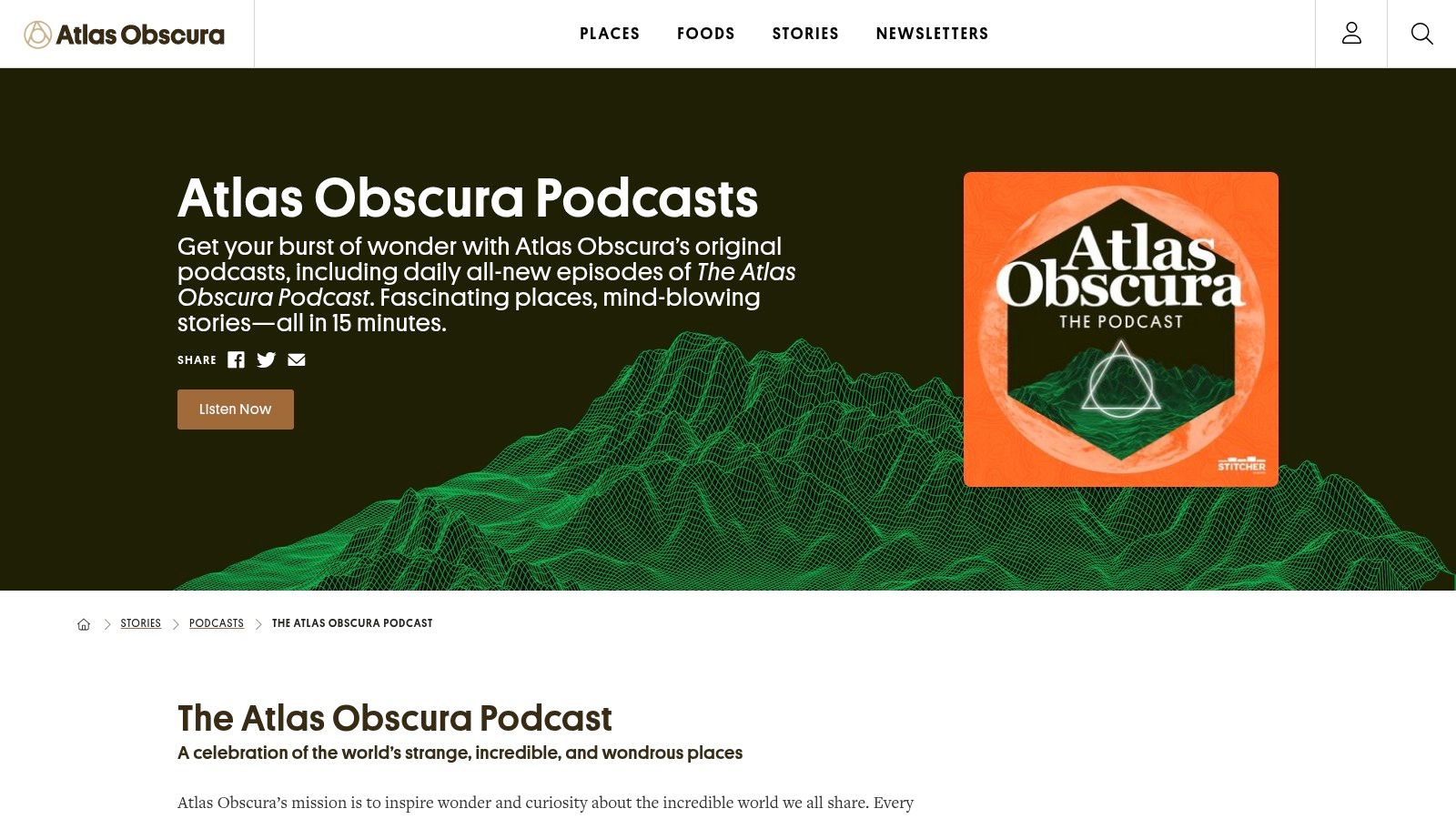
The Atlas Obscura Podcast is built for curiosity before logistics. Its tightly produced stories explore unusual places, hidden histories, and cultural oddities around the world. Episodes are short enough for a commute, but the editorial approach gives each one a distinct sense of place.
That makes it a strong fit for a destination brand, cultural institution, hotel group, or travel platform that wants to create association rather than deliver a full itinerary. The show's unusual subject matter can open a campaign with a stronger hook than a standard “top things to do” episode. Its parent brand also extends into editorial content, books, trips, and a broader travel community, giving partners more context than a standalone audio placement.
Best use for listeners and brands
The daily, bite-size structure creates consistent touchpoints. That helps listeners sample the show quickly and gives marketers a natural environment for short host-read messages, audiograms, or destination teasers. The production is sound-rich and narrative-led, so a generic sales script would feel out of place.
Practical rule: Match the ad or guest pitch to the show's sense of discovery. A conventional booking message will underperform creatively beside a story about an overlooked place or strange historical detail.
The trade-off is depth. This isn't the show to choose when a listener needs transport guidance, neighborhood comparisons, or a day-by-day route. Use it for inspiration, cultural discovery, and brand storytelling. If your campaign needs a conversion path, pair the episode with a clear landing page and a trackable call to action rather than expecting the short format to answer every planning question.
Visit The Atlas Obscura Podcast before pitching. Listen to several recent episodes and propose a place-based angle that sounds editorially native.
2. Travel with Rick Steves
Travel with Rick Steves suits listeners who want a reliable conversation with practical context. The show combines interviews with experts, authors, and local voices, with recurring attention to European travel and broader discussions about culture, history, and responsible tourism. Its public-radio pacing is deliberate, not cinematic.
The format works well for a planning-led campaign. A tourism board can support a conversation about local history, a museum can contribute an informed guest, and a travel service can fit into a discussion about how people prepare for a trip. The host's guidebook and television background also gives the show a clear point of view. It feels more like an informed briefing than a promotional travel reel.
Why the archive matters
The weekly hour-long structure and extensive archive make the show useful for destination research. Listeners can search for regional, cultural, and practical topics, while marketers can study how the show frames guest expertise before making contact. A guest pitch should bring a specific contribution, not a broad request to “talk about travel.”
For a brand considering this environment, the main benefit is authority and fit. The limitation is equally clear. The show's Europe-led identity may not suit a campaign focused on another region, and the public-radio style won't deliver the dramatic tension of a documentary series.
A strong pitch answers one question: What can this guest explain that improves a listener's understanding of a place or travel decision?
The show also works as a reference point for teams building a branded series. A case study on a Turkish Airlines travel storytelling series shows why destination content needs an editorial idea, not just a list of features.
Explore Travel with Rick Steves and assess recent episode subjects before proposing a guest, sponsorship, or destination partnership.
3. Zero To Travel
Zero To Travel is the practical choice for listeners who want to design a lifestyle around travel. Host Jason Moore speaks with location-independent professionals, long-term travelers, creators, families, and other guests who explain how they structure work, money, movement, and decision-making.
The guest-driven format creates a useful distinction from destination shows. An episode might help someone think through remote work, slow travel, van life, equipment, or the emotional side of leaving a familiar routine. That makes the show relevant to travel platforms, financial products, luggage companies, work-from-anywhere services, and brands that serve independent travelers.
The fit is tactical, not purely aspirational
The strongest episodes give listeners a decision or method they can apply. A guest who explains how they built a sustainable travel routine has more value than a guest who lists favorite destinations. Brands should bring evidence of real user problems, clear expertise, and a useful point of view.
The back catalog spans different travel lifestyles, which helps marketers find a relevant context. It also creates a challenge. Episode length and subject matter can vary, so a casual listener may find some conversations demanding. The show is better for an audience already interested in independent or extended travel than for someone looking for a quick destination primer.
For a guest booking, prepare a narrow angle. “How our company supports travelers” is weak. “What remote workers misunderstand about maintaining routines while moving between destinations” gives the host something to develop.
Build the conversation around a decision, not a product tour.
Visit Zero To Travel and review the host's recent questions. Your proposed topic should offer practical takeaways without turning the episode into a product demonstration.
4. Amateur Traveler
Amateur Traveler is the most direct choice for trip planning. Each episode focuses on one destination and often features a knowledgeable guest or local who can discuss routes, neighborhoods, logistics, and the details that help a traveler move from general interest to an actual itinerary.
That structure makes the show useful to listeners who are researching a trip. It also gives tourism boards, hotels, tour operators, and local experts a clear editorial entry point. A good guest can explain how to divide time across a destination, which areas suit different travelers, and where first-time visitors tend to make poor assumptions.
Where it works best
The archive is broad, the feed remains active, and the accompanying show notes and blog content support research beyond the audio episode. That makes the program valuable for listeners who want to return to an episode while planning. It also gives marketers more surfaces to evaluate than the recording alone.
The production is straightforward rather than cinematic. That's a strength when clarity matters, but it may feel less polished to a brand seeking an emotional documentary environment. Episode quality can also depend on the guest's knowledge. A destination expert who understands transport, timing, and traveler constraints will create a more useful episode than a general enthusiast.
Planning content earns trust by naming the inconvenient details. Distances, transfers, seasonal limitations, and realistic pacing matter more than a long list of attractions.
A brand should avoid sending a spokesperson with only promotional talking points. The better approach is to provide a useful destination briefing that happens to include relevant expertise.
See Amateur Traveler and review its destination coverage before proposing a topic. For teams producing their own show, travel and hospitality podcast production support can help turn that same planning discipline into a repeatable format.
5. Armchair Explorer
Armchair Explorer is designed for premium documentary storytelling. Hosted by travel writer Aaron Millar, the show uses immersive reporting, original scoring, and carefully shaped narratives around individual adventures. It feels closer to an audio feature than a conventional travel advice program.
That difference matters for brands. A destination can become the setting for a human story rather than the subject of a promotional checklist. An outdoor company, tourism board, premium accommodation provider, or adventure operator can support a narrative built around challenge, place, transformation, or discovery. The format creates more emotional room than a standard interview.
Choose narrative over frequency
The production quality is the attraction, but it also raises the bar. A weak guest, thin premise, or obvious commercial message will stand out quickly. Partners need to contribute access, a compelling setting, or a story with enough tension to support the format. A simple product mention won't carry the same weight as a well-reported adventure.
The release cadence is less useful for teams that need a predictable weekly planning channel. The show is better for a major campaign, a seasonal launch, or a story that can live beyond the original publication window. It also isn't the right choice for listeners seeking precise booking information or step-by-step routes.
Use Armchair Explorer when the destination needs a story, not when it needs a brochure.
For a guest pitch, lead with the human stakes. Explain who faced the challenge, what changed, and why the listener should care. Keep operational details available, but don't make them the center of the proposal.
Explore Armchair Explorer before approaching the team. Assess whether your campaign has enough access and narrative substance to justify a premium documentary treatment.
6. Women Who Travel
Women Who Travel is a strong fit for perspective-led travel and audience-specific sponsorship. Anchored by Condé Nast Traveler's editorial team, the show discusses women's experiences with travel, safety, work, identity, and community alongside destination coverage.
The editorial context gives the show more range than a conventional itinerary program. A conversation can address how a traveler makes decisions, how work shapes mobility, or how safety changes the way someone experiences a destination. That makes it relevant to travel brands, hospitality companies, airlines, luggage providers, and services that want to speak to a defined audience without reducing listeners to a demographic label.
The editorial ecosystem adds value
The Condé Nast Traveler connection extends beyond the audio feed into newsletters, social channels, and community activity. For a sponsor, that broader brand environment can support a campaign that needs more than one audio impression. It can also help a guest whose expertise fits travel, culture, career, or safety rather than a narrow destination niche.
The trade-off is format consistency. Publishing cadence can vary by season, and some episodes lean toward conversation rather than direct how-to guidance. That isn't a weakness if your goal is trust and perspective. It is a limitation if your campaign needs a precise planning episode with clear logistics.
A strong pitch should respect the show's audience and editorial voice. Avoid positioning a product as a universal solution. Explain the problem it addresses, identify the travelers affected, and offer a guest who can discuss the issue with experience and nuance.
Audience specificity works best when the conversation starts with lived travel decisions, not demographic shorthand.
Visit Women Who Travel and listen for the balance between personal experience, editorial analysis, and practical advice before proposing a partnership.
7. Not Lost
A traveler arrives in a city with no checklist, only questions about who lives there and what gives the place meaning. Not Lost serves listeners who want reflective city storytelling, with Brendan Francis Newnam examining travel, hospitality, and human connection through seasonal, city-focused narratives. Pushkin Industries favors strong writing, careful editing, and cultural texture over frequent utility episodes.
That approach gives brands a premium editorial setting. Hotels, airlines, destination organizations, and cultural partners can contribute to stories about how people meet, move, eat, work, and understand a city. The audience also extends beyond dedicated trip planners to listeners interested in lifestyle, culture, and human relationships. For a reference point on how narrative travel shows are built, see our guide to the best narrative podcasts.
A better fit for meaning than mechanics
The show is not built for weekly trip logistics. Seasons arrive intermittently, and episodes rarely offer detailed guidance on transport, hotel selection, or itinerary order. That reduces its value for direct-response campaigns, while strengthening its use as an evergreen storytelling vehicle.
Planning requires a broader narrative arc rather than a single insertion. A city partnership could support several related themes. A guest should bring an observation or experience that adds emotional and cultural depth.
Not Lost works when the listener wants to understand why a place matters, not just how to get around it.
A booking pitch should avoid generic travel credentials. Offer a specific story about hospitality, belonging, migration, food, work, or the way a city changes the traveler. The host then has a clear premise with room to develop.
Explore Not Lost. Use the show when your message can serve the story first, with the brand's role made relevant through context rather than a forced sales line.
Top 7 Travel Podcasts Comparison
Podcast | Format & Complexity 🔄 | Resource Req. ⚡ | Expected Quality ⭐ | Primary Outcomes 📊 | Ideal Use Cases 💡 |
|---|---|---|---|---|---|
The Atlas Obscura Podcast | 🔄🔄🔄🔄, short, tightly produced narratives | ⚡⚡⚡⚡, daily production & sound design | ⭐⭐⭐⭐, high editorial value | 📊📊📊, brand awareness & inspirational engagement | 💡 Short-form brand storytelling; curiosity-driven campaigns |
Travel with Rick Steves | 🔄🔄🔄, weekly hour-long conversations | ⚡⚡⚡, host-led, archive maintenance | ⭐⭐⭐⭐, authoritative, trusted voice | 📊📊📊📊, research & planning utility, credibility | 💡 Destination research; educational partnerships |
Zero To Travel | 🔄🔄, conversational, guest-driven format | ⚡⚡, host + community contributions | ⭐⭐⭐, practical, actionable content | 📊📊📊, community growth & behavioral change | 💡 Remote-work lifestyle, long-term travel tactics |
Amateur Traveler | 🔄🔄🔄, weekly destination deep-dives | ⚡⚡⚡, research-heavy show notes & archives | ⭐⭐⭐⭐, reliable, itinerary-friendly | 📊📊📊📊, direct trip-planning conversions, SEO value | 💡 Itinerary planning; SEO-driven content marketing |
Armchair Explorer | 🔄🔄🔄🔄🔄, cinematic, feature-style documentaries | ⚡⚡⚡⚡⚡, original scoring & high-end production | ⭐⭐⭐⭐⭐, award-winning, emotionally resonant | 📊📊📊📊, strong brand storytelling & shareability | 💡 High-impact brand placements; premium storytelling |
Women Who Travel (Condé Nast) | 🔄🔄🔄, editorial interviews with community tie-ins | ⚡⚡⚡⚡, magazine resources & cross-channel support | ⭐⭐⭐⭐, curated, perspective-driven | 📊📊📊📊, discoverability & community engagement | 💡 Targeting women travelers; inclusive campaigns |
Not Lost (Pushkin Industries) | 🔄🔄🔄🔄, season-based, essay-style arcs | ⚡⚡⚡⚡, premium season production | ⭐⭐⭐⭐, well-crafted, evergreen narratives | 📊📊📊, cultural resonance & brand-safe placements | 💡 Reflective cultural storytelling; long-form campaigns |
Match Each Show to One Clear Goal
Choose the show by the job it needs to do. The Atlas Obscura Podcast and Not Lost are strongest for brand storytelling, where atmosphere, place, and editorial memory matter more than itinerary detail. Amateur Traveler and Travel with Rick Steves suit planning-led content, especially when a destination or guest can provide useful context. Zero To Travel and Women Who Travel are better for lifestyle and audience-specific sponsorship, with room for conversations about how people work, move, and make travel decisions.
The distinction matters because podcast advertising and guest bookings depend on context. Edison Research reported that 46% of weekly U.S. podcast listeners had purchased a product or service after hearing a podcast advertisement (Edison Research's podcast consumer report). That supports a performance-minded approach, but the result still depends on creative fit, host credibility, and a call to action that matches the listener's stage.
Before pitching a guest, listen to two recent episodes. Note the average runtime, recurring questions, guest profile, and level of commercial integration. Then propose one specific angle that fits the show's structure. Don't send a broad biography and ask the producer to find the story for you.
For advertising, separate your objectives. A host-read placement may support trust and consideration. A destination series may build association. A trackable offer or landing page can capture response. The best plan often combines those roles rather than forcing one episode to perform every job.
For audio and video production, strategic guest bookings, or podcast ad placements, Podmuse offers a free consultation at Podmuse. The team can help match a travel campaign to the right show format, production approach, and distribution plan.
Podmuse helps travel and hospitality brands produce audio and video podcasts, manage editing and distribution, and plan host-read, sponsorship, and programmatic advertising. Visit Podmuse to discuss the right show, guest strategy, or campaign mix for your travel marketing goals.
Comments