
7 Best Books on Podcasting for Better Shows

Stop buying books on podcasting because someone called them essential. That advice produces shelves full of launch checklists and shows that still sound interchangeable. The right book depends on your bottleneck. One show needs a sharper audience definition, another needs a repeatable production system, and a brand team might need help turning listening into trust or qualified demand.
This list ranks titles by job, not popularity. That matters because the field matured in stages. Podcasting took hold in 2004, an early practical guide appeared in 2005, and later work shifted toward journalism, narrative craft and professional production, a progression traced in a podcast books timeline from CT State Library. Read for the problem in front of you. Founders, marketers and producers should pick one title, apply one lesson to a real episode, then check whether completion, retention or conversion improved.
Table of Contents
1. Make Noise A Creator's Guide to Podcasting and Great Audio Storytelling by Eric Nuzum - What it does best
2. The Audience Is Listening A Little Guide to Building a Big Podcast by Tom Webster - Use it to fix retention
3. Podcasting For Dummies 4th Edition by Tee Morris and Chuck Tomasi - How to use it without getting stuck in basics
4. Big Podcast Grow Your Podcast Audience Build Listener Loyalty and Get Everybody Talking About Your Show by David Hooper - Growth needs better measurement
5. Out on the Wire The Storytelling Secrets of the New Masters of Radio by Jessica Abel - Turn craft into an episode edit
6. Finding Your Voice in Radio Audio and Podcast Production by Rob Quicke - Make the exercises brand useful
7. Podcasting The Audio Media Revolution by Martin Spinelli and Lance Dann - Who should spend time here
Build a Reading Path Around Your Podcast's Next Bottleneck - Turn reading into an operating test
1. Make Noise A Creator's Guide to Podcasting and Great Audio Storytelling by Eric Nuzum
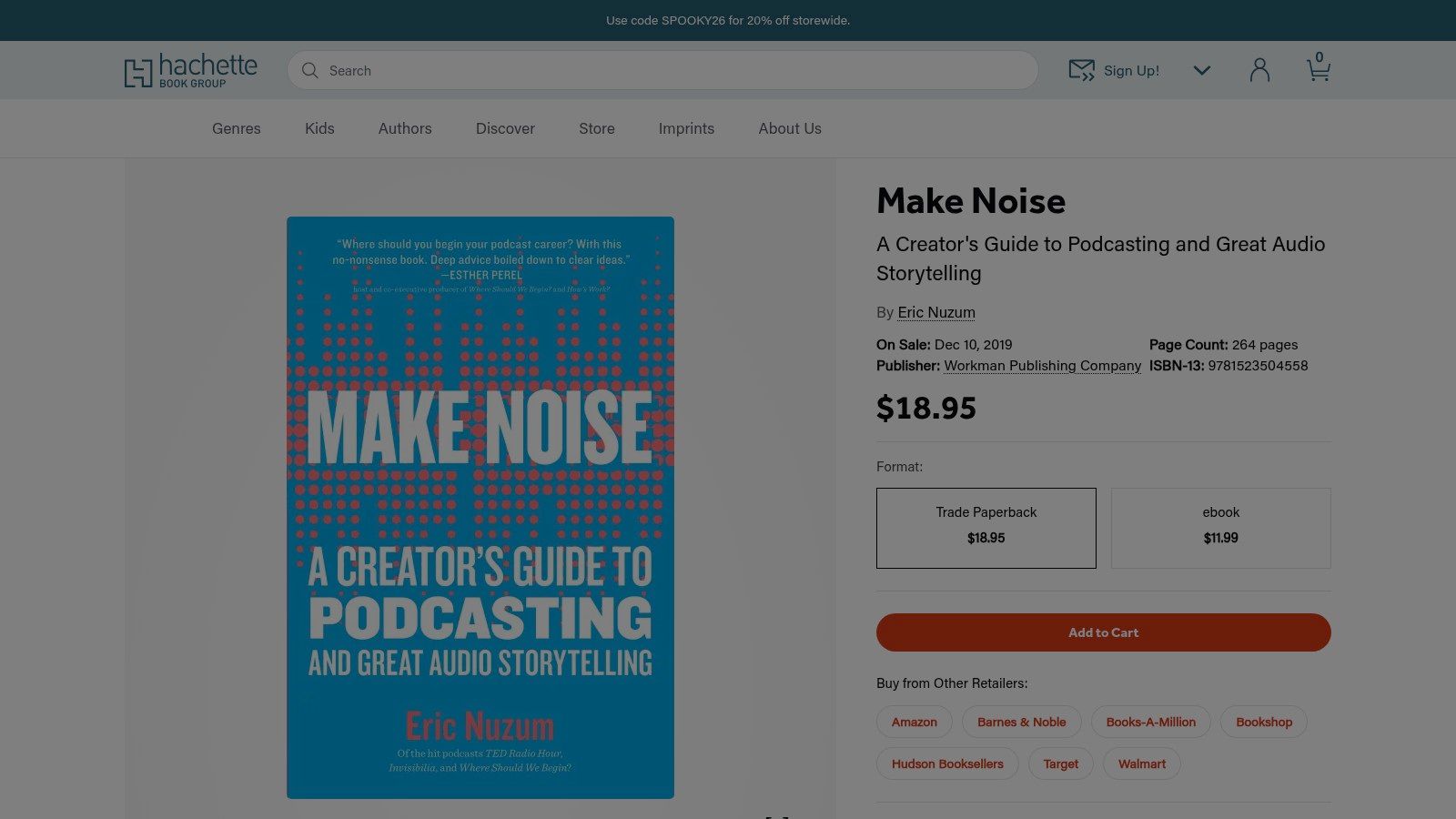
Buy Make Noise from Hachette Book Group if your show has competent production but no clear identity. Eric Nuzum draws on leading podcasting at NPR and work at Audible to connect premise, storytelling, hosting and audience experience. It's a creative direction book, not an equipment manual.
What it does best
Nuzum forces you to define what a listener gets from your show that they can't get elsewhere. He covers interviews, audience development, marketing and running a creative team, so the advice stays useful after launch. Brand teams should translate that into a one page show promise, three recurring segment rules and a host brief that bans generic questions.
Study writing with voice examples to study alongside the chapters on point of view if your scripts feel polished but anonymous. Then apply his thinking through a narrative podcast production approach built for brands, especially when executives want thought leadership without a sales script.
Best for: Creators refining a distinctive concept
Strength: Broad creative and strategic perspective
Limit: Some platform detail dates from 2019
The publisher lists the paperback at $18.95 and ebook at $11.99 on its product page above. Choose this first when your bottleneck is differentiation. Don't choose it if you need step by step recording settings.
2. The Audience Is Listening A Little Guide to Building a Big Podcast by Tom Webster
Your audience isn't everyone who could theoretically care. Tom Webster builds The Audience Is Listening around that discipline, using radio and podcast research to help teams shape a show for a defined listener.
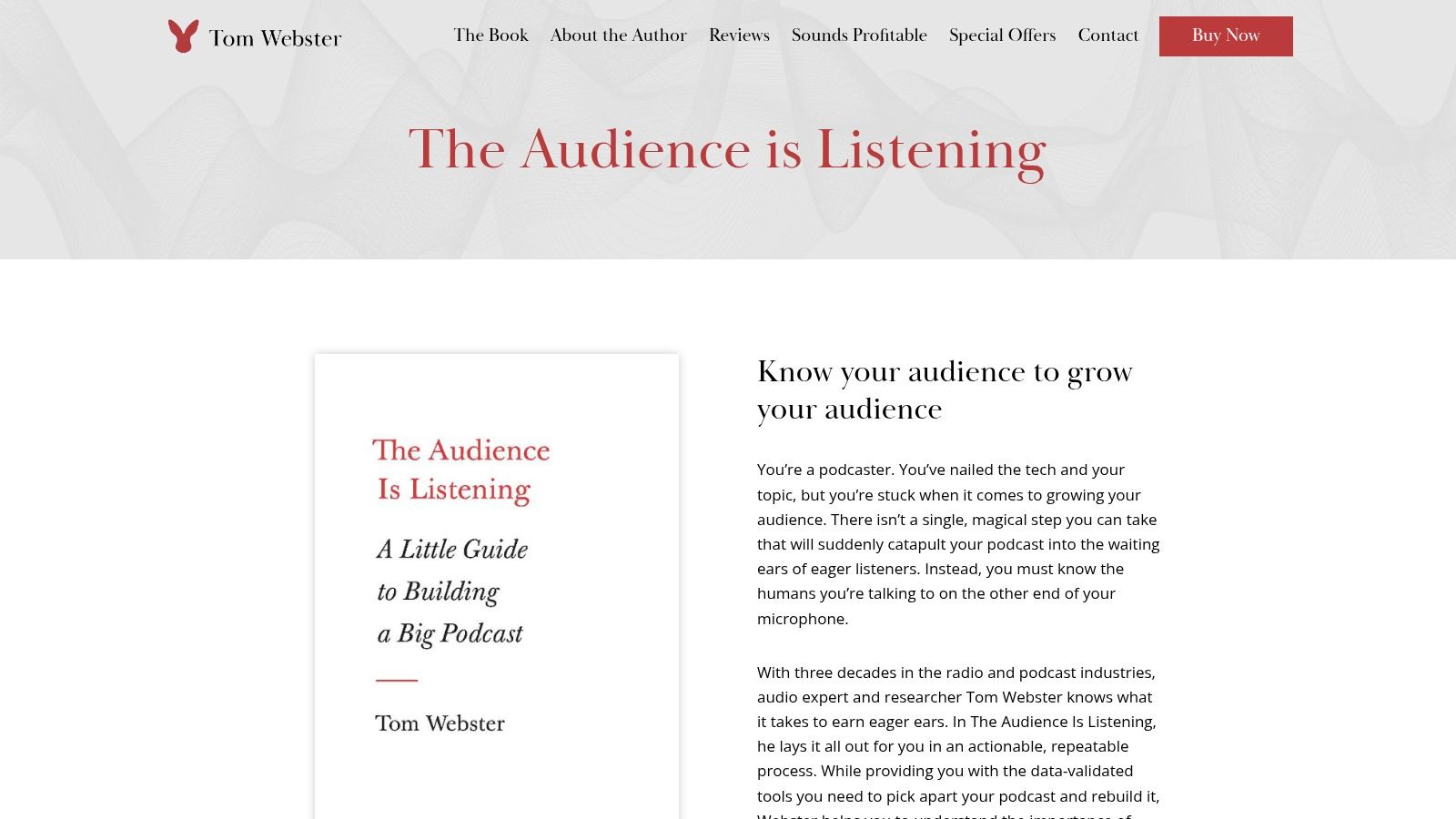
The book gives you a process for evaluating whether your premise, host, episode structure and calls to action serve the same person. That's directly useful for brands, because a chief marketing officer, a practitioner and a founder don't stay for the same reasons. Pick one primary listener and make every editorial trade off explicit.
Use it to fix retention
Pair Webster's audience process with a practical podcast audience growth system and audit your last episodes for opening clarity, payoff timing and reasons to return. Don't just chase first listens. The market is now cross format. In 2025, 73% of Americans aged 12+ had consumed a podcast in audio or video form, and 51% had watched one, according to Edison Research's Infinite Dial 2025 findings. Your defined audience should determine whether video is a discovery layer, a full format or an unnecessary cost.
Practical rule: If you can't describe your listener's job, problem and listening moment in three sentences, you're not ready to redesign artwork or buy ads.
Webster won't teach editing or recording. That's fine. Read him when growth has stalled despite decent production, and use another title for technical execution.
3. Podcasting For Dummies 4th Edition by Tee Morris and Chuck Tomasi
Beginners don't need seven specialized books. They need one reliable map. Podcasting For Dummies from Wiley covers concept development, recording, editing, distribution, promotion and monetization in a reference format you can dip into by task.
Tee Morris and Chuck Tomasi are strongest when you need the whole workflow in one place. A small brand team can use the book to assign responsibilities across planning, guest preparation, production, publishing and promotion. It prevents the common failure where a company buys microphones before deciding who owns editing notes, show notes, approvals and distribution.
How to use it without getting stuck in basics
Read selectively. Start with concept and production, then use a focused guide to recording podcast audio cleanly to build your actual session checklist. Convert the relevant chapters into standard operating procedures for file naming, backup, remote guest checks, editing revisions and publishing quality control.
Planning: Concept, format and interview preparation
Production: Recording, editing and distribution workflow
Growth: Audience building and monetization options
Wiley lists the paperback at $29.99 and ebook at $18.00 on its product page above. The trade off is depth. Published in 2020, it won't answer every current platform question. Treat it as your operating manual, then move to a specialized book once the show is running.
4. Big Podcast Grow Your Podcast Audience Build Listener Loyalty and Get Everybody Talking About Your Show by David Hooper
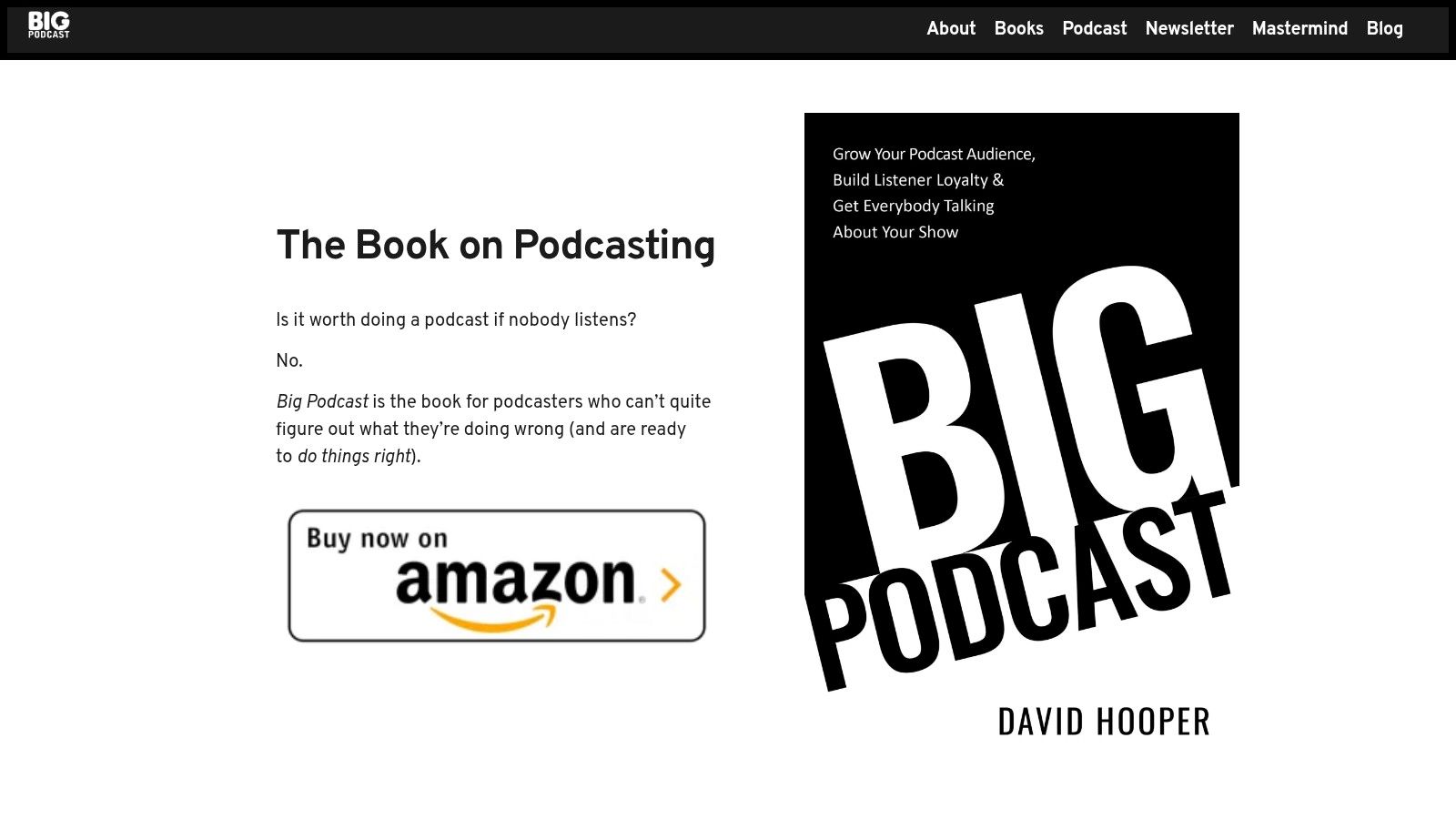
David Hooper writes for podcasters who already have a show and need momentum. Big Podcast on the author's book page focuses on attracting listeners, building loyalty, interviews and monetization, with 101 episode templates listed among its core features on that page.
Those templates are the reason to buy it. They help you build a content pipeline instead of inventing an episode from a blank page each week. For a branded show, adapt templates into recurring formats such as customer problem breakdowns, expert debates, field lessons and audience question episodes. Repeatable does not mean repetitive. It means production gets faster while the listener learns what to expect.
Growth needs better measurement
Don't stop at downloads. Research highlighted in the Cumulus Media and Signal Hill Insights Podcast Download Spring 2025 report notes that downloads and listens fail to capture co-listening. Combine Hooper's growth plays with content performance metrics that matter and track retention, branded search, site visits and assisted conversions by campaign.
Build one strong repeatable format before adding more segments. Loyalty comes from a promise kept consistently.
The marketing first approach won't suit every narrative or editorial show, and the advice reflects a 2019 publication date. Use it for episode planning and promotion energy, not as your only editorial compass.
5. Out on the Wire The Storytelling Secrets of the New Masters of Radio by Jessica Abel
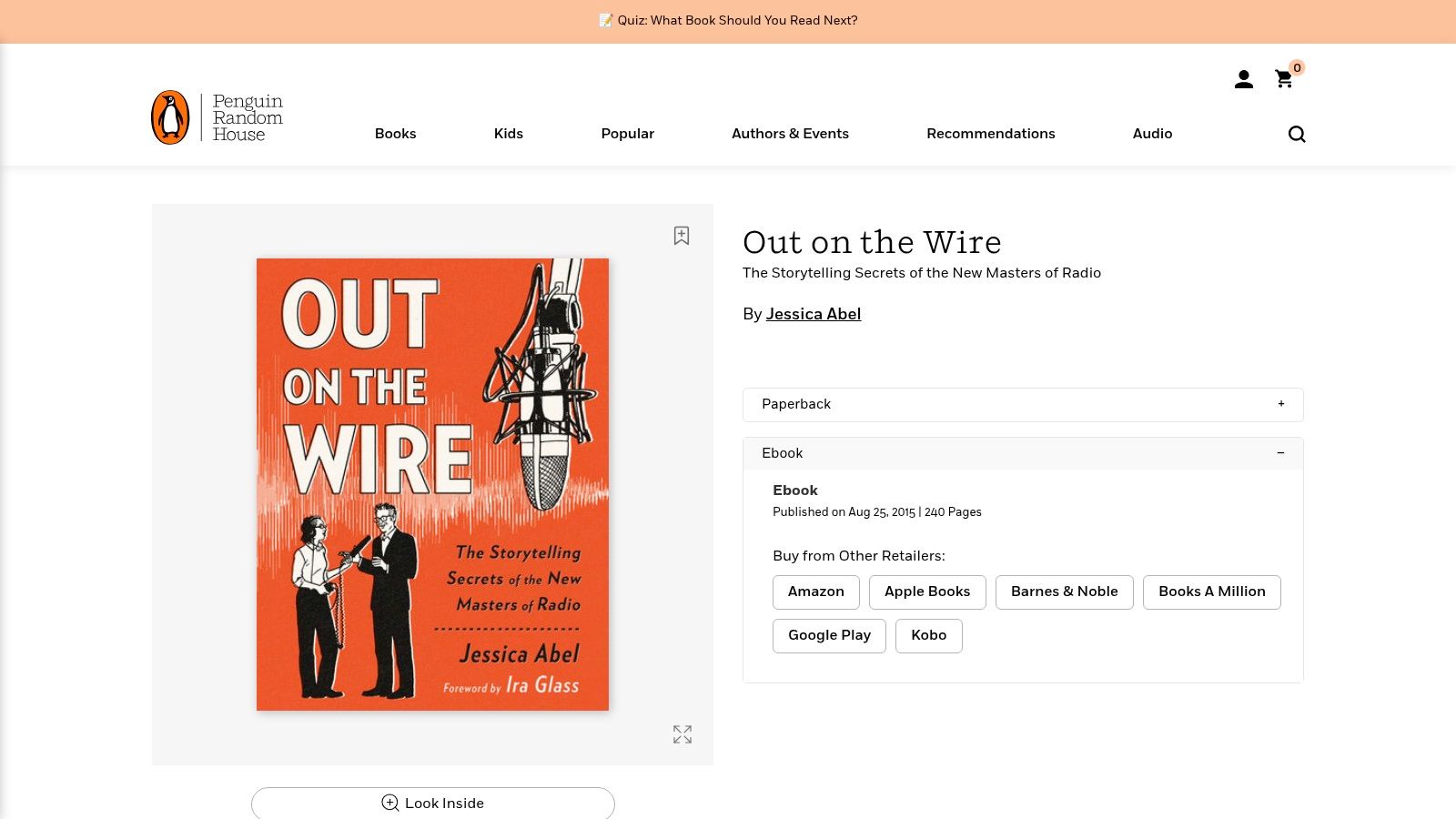
If your interviews contain good material but episodes still drag, your problem is structure. Jessica Abel's Out on the Wire from Penguin Random House uses graphic narrative to show how producers behind programs such as This American Life, Radiolab, Planet Money and Serial find, shape and edit stories.
The visual format makes abstract craft concrete. You can see how a scene earns its place, how producers pull tension from interviews and how editing changes meaning. That makes the book unusually effective for marketers and subject matter experts who have never worked in audio but need to judge whether an episode has a real arc.
Turn craft into an episode edit
Before recording, require a one sentence story question and a planned turn. After recording, mark the moment where the listener's understanding changes. Cut setup that doesn't serve that turn. This discipline benefits founder interviews and customer stories because it replaces chronological biography with conflict, decision and consequence.
Best use: Narrative nonfiction and interview storytelling
Format advantage: Visual explanations you'll remember
Not covered: Advertising operations and current technology
Penguin Random House lists the paperback at $20.00, with an ebook also available, on its product page above. Goodreads records for this 2015 title show 1,523 ratings, a figure included in verified background on early podcast books. Read it to become a better story editor, not to learn distribution.
6. Finding Your Voice in Radio Audio and Podcast Production by Rob Quicke
A recognizable voice is not an accent or a louder personality. It's a consistent set of choices about pace, tone, curiosity and authority. Rob Quicke's Finding Your Voice from Routledge treats audio production as both craft and personal expression, with exercises and practitioner interviews.
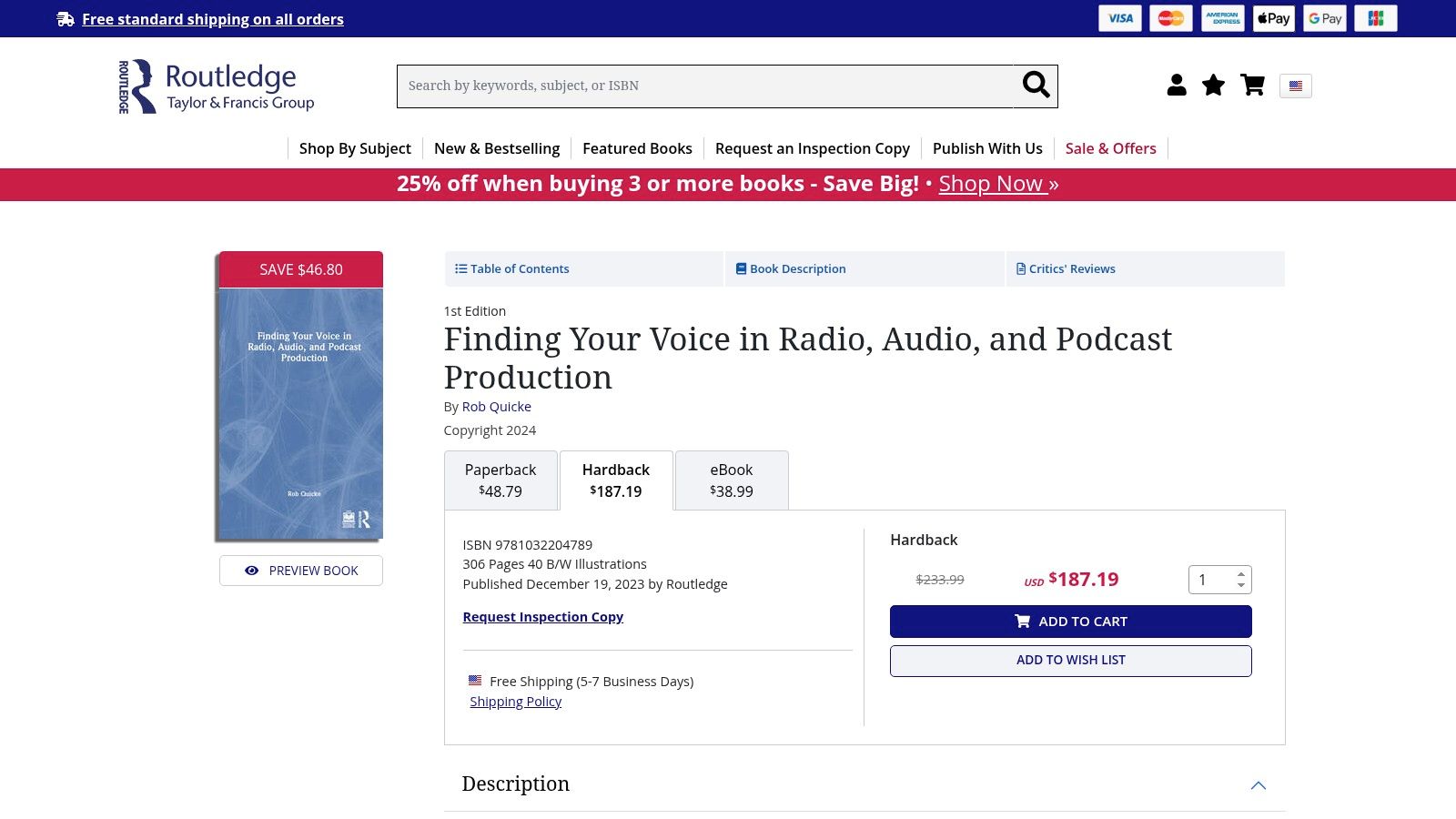
This is the most textbook like recommendation here. That's a strength for new producers, presenters and internal brand teams who need structured practice rather than motivational advice. Routledge lists a 306 page edition, published in 2023, on its product page above, so expect a fuller learning program than a quick start checklist.
Make the exercises brand useful
Have your host record the same introduction three ways. Try direct expert, curious peer and storyteller. Have target listeners identify which version sounds credible and which sounds like an advertisement. Then document vocabulary, pacing and question style in a host guide so guest episodes don't drift depending on who's producing that week.
Host test: Remove the logo and intro music. If a regular listener can't identify your show from the host's first minute, the voice isn't distinct yet.
Quicke does not focus on branded podcast marketing or advertising. Use him to develop presenters and producers. Pair the book with a separate growth and measurement resource once the sound is consistent.
7. Podcasting The Audio Media Revolution by Martin Spinelli and Lance Dann
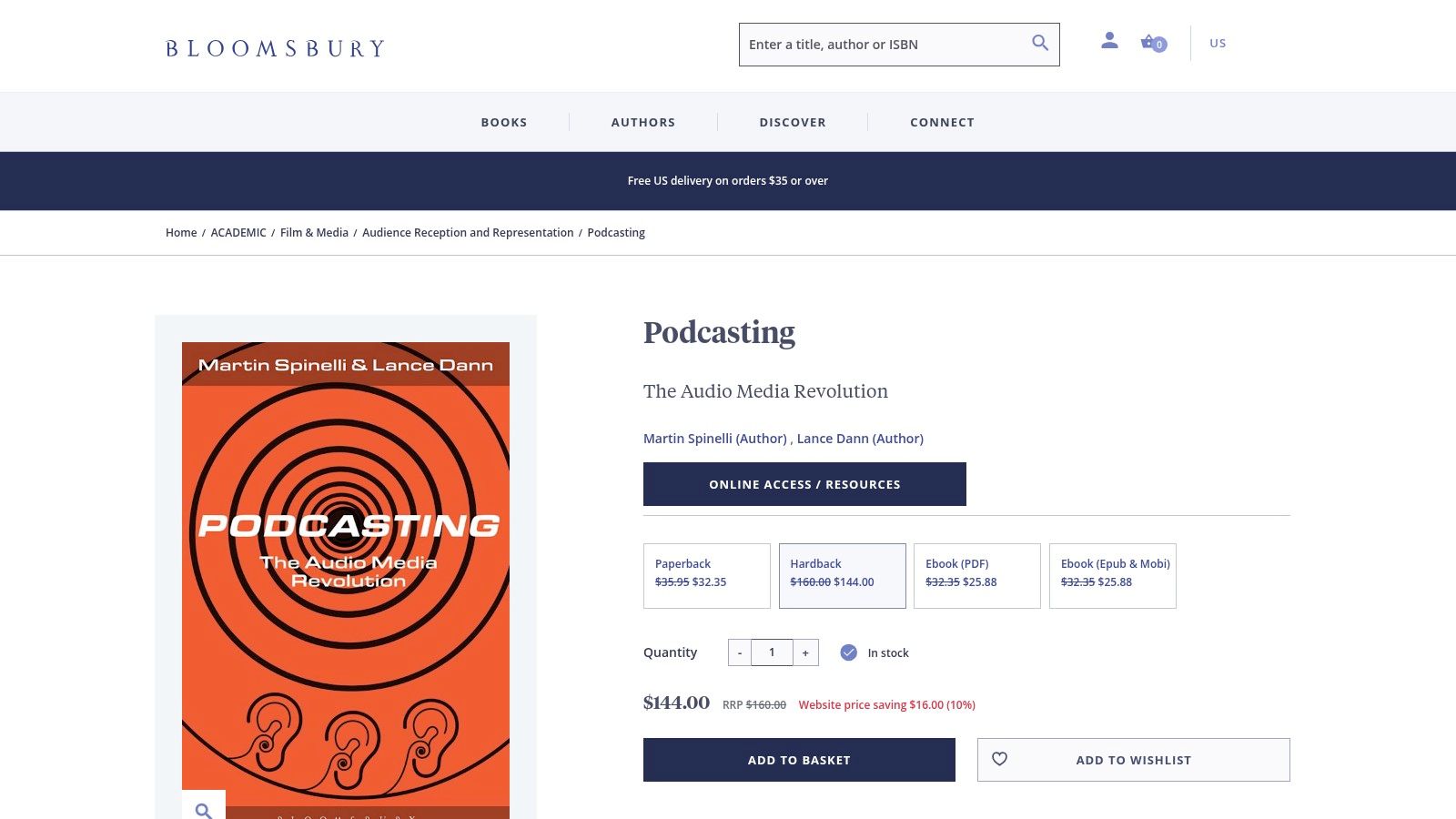
Strategists should read Martin Spinelli and Lance Dann before approving a long term show. Podcasting The Audio Media Revolution from Bloomsbury is an academic study built from interviews with producers and industry organizations, audience research, production analysis and close listening.
Its 280 page scope is described in Google Books information for Podcasting The Audio Media Revolution, and its case studies include Radiolab, Serial and Welcome to Night Vale. The authors examine narrative, intimacy, fandom, audience construction, ethics and platform economics. Those are strategy questions, not launch tasks.
Who should spend time here
Use the book to form hypotheses. Does intimacy come from host self disclosure, episode length, community participation or a niche shared identity? Then validate the hypothesis with your first party completion, retention, conversion and brand lift data. Don't borrow a case study's outcome and assume your market will behave the same way.
The wider research base supports that caution. A 2025 bibliometric study analyzed 3,660 podcast education documents published from 2005 through 2025, according to the Edufortech bibliometric analysis of podcast based learning. Favor books that separate evidence from practitioner opinion and explain methods, samples and measurement limits.
Bloomsbury lists the paperback at $35.95, plus ebook formats, on its product page above. Skip it if you need equipment or launch instructions. Read it if you're deciding what kind of medium you're building and why it deserves sustained investment.
Top 7 Podcasting Books Compared
Book | 🔄 Implementation Complexity | ⚡ Resource Requirements | 📊 Expected Outcome | 💡 Ideal Use Case | ⭐ Key Advantage |
|---|---|---|---|---|---|
Make Noise, Eric Nuzum | Moderate; craft and strategy focused | Reading time; no special equipment required | Stronger storytelling, interviews, and show strategy | Creators or teams developing a distinctive podcast | Connects creative choices with listener experience |
The Audience Is Listening, Tom Webster | Moderate; audience-research focused | Reading time; audience insights are helpful | Better listener fit, retention, and repeat listening | Shows seeking audience-led growth | Centers decisions on listener needs |
Podcasting For Dummies, 4th Edition, Tee Morris and Chuck Tomasi | Low to moderate; broad reference | Reading time; basic recording setup for practical application | A working overview from planning through promotion | Beginners seeking an all-in-one introduction | Covers the full podcast workflow |
Big Podcast, David Hooper | Moderate; growth and marketing focused | Reading time; consistent episode planning | More repeatable formats and audience-growth ideas | Active or planned shows focused on reach and loyalty | Includes 101 episode templates |
Out on the Wire, Jessica Abel | Low to moderate; narrative learning | Reading time; no special equipment required | Improved understanding of story structure and editing | Narrative nonfiction creators seeking inspiration | Visual, behind-the-scenes storytelling lessons |
Finding Your Voice in Radio, Audio, and Podcast Production, Rob Quicke | Moderate; structured, exercise-based | Study time; exercises and practice | Stronger production skills and presentation style | New producers and presenters building audio skills | Combines practical learning with personal expression |
Podcasting: The Audio Media Revolution, Martin Spinelli and Lance Dann | Moderate to high; academic and analytical | Dedicated reading time; no equipment required | Deeper understanding of podcast culture, audiences, and strategy | Researchers, strategists, and experienced producers | Substantial industry context supported by case studies |
Build a Reading Path Around Your Podcast's Next Bottleneck
For a new branded podcast, start with Podcasting For Dummies for operating basics. It gives a small team enough structure to plan, record, publish and promote without inventing every process. Then read Make Noise to sharpen creative direction, because efficient production won't save a show with no distinct promise.
Add Finding Your Voice once a host is chosen. Its exercises help you turn an executive, founder or practitioner into a consistent presenter instead of a person reading approved talking points into a microphone. Those three books solve the launch sequence in the right order. System first, concept second, performance third.
For an established show, change the order. Use Out on the Wire when episodes have strong guests but weak arcs. Use The Audience Is Listening when listeners sample but don't return. Use Big Podcast when the team needs repeatable episode formats and a fuller growth pipeline. Each title fixes a different failure, so don't read all three passively and call that a strategy.
Turn reading into an operating test
Select one lesson and assign it to one episode. Change the cold open, the story turn, the host delivery or the recurring format. Keep the rest stable so you can interpret the result. Then review completion, repeat listening, audience feedback and business actions, and use AIDictation reviews transcription software if transcripts will help you audit language, search themes or repurpose strong passages accurately.
Reserve Podcasting The Audio Media Revolution for strategists who need context on audiences, communities, ethics and the long term business of audio. It belongs in planning discussions about format and listener relationship, not in a production checklist. Treat these books on podcasting as a toolkit, not a syllabus. Your next book should be the one that removes the constraint your data and your listeners have already exposed.
Podmuse helps B2B and consumer brands plan, produce and promote audio and video podcasts, and buys host read, sponsorship and programmatic podcast advertising to reach targeted listeners at scale. Bring us your next bottleneck, whether that's show concept, production, audience growth or executive guest placements, and book a free consultation with Podmuse to turn the right lesson into a measurable podcast program.
Comments